
8 Bodyweight Shoulder Exercises for Strength
22 August 2026Updated 25 August 2026
Bodyweight exercises can develop shoulder pressing strength, scapular control and tolerance for weight-bearing through the arms. They cannot replace every form of pulling or external resistance, and they are not a treatment for an undiagnosed shoulder problem. Choose a variation that is comfortable and appropriate to your current ability.
Table of Contents
- Before You Start
- 1. Wall Slides
- 2. Prone Y and T Raises
- 3. Scapular Push-Ups
- 4. Incline or Floor Push-Ups
- 5. Plank Shoulder Taps
- 6. Bear Crawls
- 7. Pike Push-Ups
- 8. Wall Handstand Holds
- Putting the Exercises Together
Before You Start
In the 2021 Health Survey for England, 32% of adults met the muscle-strengthening guideline. The full figures are available in the NHS England physical-activity report.
The UK Chief Medical Officers’ guidance recommends strengthening all major muscle groups on at least two days each week. Shoulder exercises are only one component; a balanced programme should also include pulling, lower-body and trunk work.
Warm up with several minutes of comfortable whole-body movement and easy versions of the exercise you plan to perform. Muscular effort is expected, but sharp pain, instability, numbness or a catching sensation is not a cue to push deeper.
1. Wall Slides
Wall slides practise controlled arm elevation with light contact against a wall. Stand with the back or forearms supported, keep the ribs comfortable and slide the arms upwards only as far as you can without forcing the motion.
This is a mobility and coordination drill rather than a major strength exercise. Do not force the hands or elbows against the wall by arching the lower back.
- Easier: use a shorter range.
- Harder: move more slowly and pause without shrugging.
2. Prone Y and T Raises
Lie face down with the forehead supported on a folded towel. Lift the arms a small distance from the floor in a Y shape, lower them, then repeat in a T shape. Keep the neck relaxed and avoid using a large back arch to create height.
The movement creates a low-load challenge for the rear shoulder and shoulder-blade muscles. Small, controlled movement is sufficient.
3. Scapular Push-Ups
Begin against a wall, on a raised surface or in a floor plank. Keep the elbows straight while allowing the shoulder blades to move gently towards one another, then push the surface away so they move around the rib cage. Avoid dropping the head or bending through the lower back.
Progress by lowering the hand support. This exercise trains active scapular movement; it should not be described as correcting posture or preventing every shoulder injury.
4. Incline or Floor Push-Ups
Push-ups train the chest and triceps, with the anterior shoulder contributing to pressing and stability. Place the hands on a secure raised surface for an easier version. Keep the body aligned, lower under control and use a range that feels comfortable.
Increase difficulty by lowering the support, adding a pause or progressing to the floor. Hand width can be adjusted for wrist and shoulder comfort; an exact “diamond” shape is unnecessary.
5. Plank Shoulder Taps
From a raised or floor plank, shift weight into one arm and touch the opposite shoulder with the other hand. Keep the hips and trunk as steady as practical, then alternate sides.
Use a wider foot position or higher hand support to reduce the balance demand. This is an anti-rotation and shoulder-stability exercise, not a test of tapping speed.
6. Bear Crawls
Start on hands and knees, lift the knees slightly and take short opposite-hand-and-foot steps. Move slowly enough to maintain control through the shoulders and trunk.
Begin with a static bear hold or a few steps forwards and backwards. Crawling adds repeated weight transfer, so stop when wrist, shoulder or trunk position deteriorates.
7. Pike Push-Ups
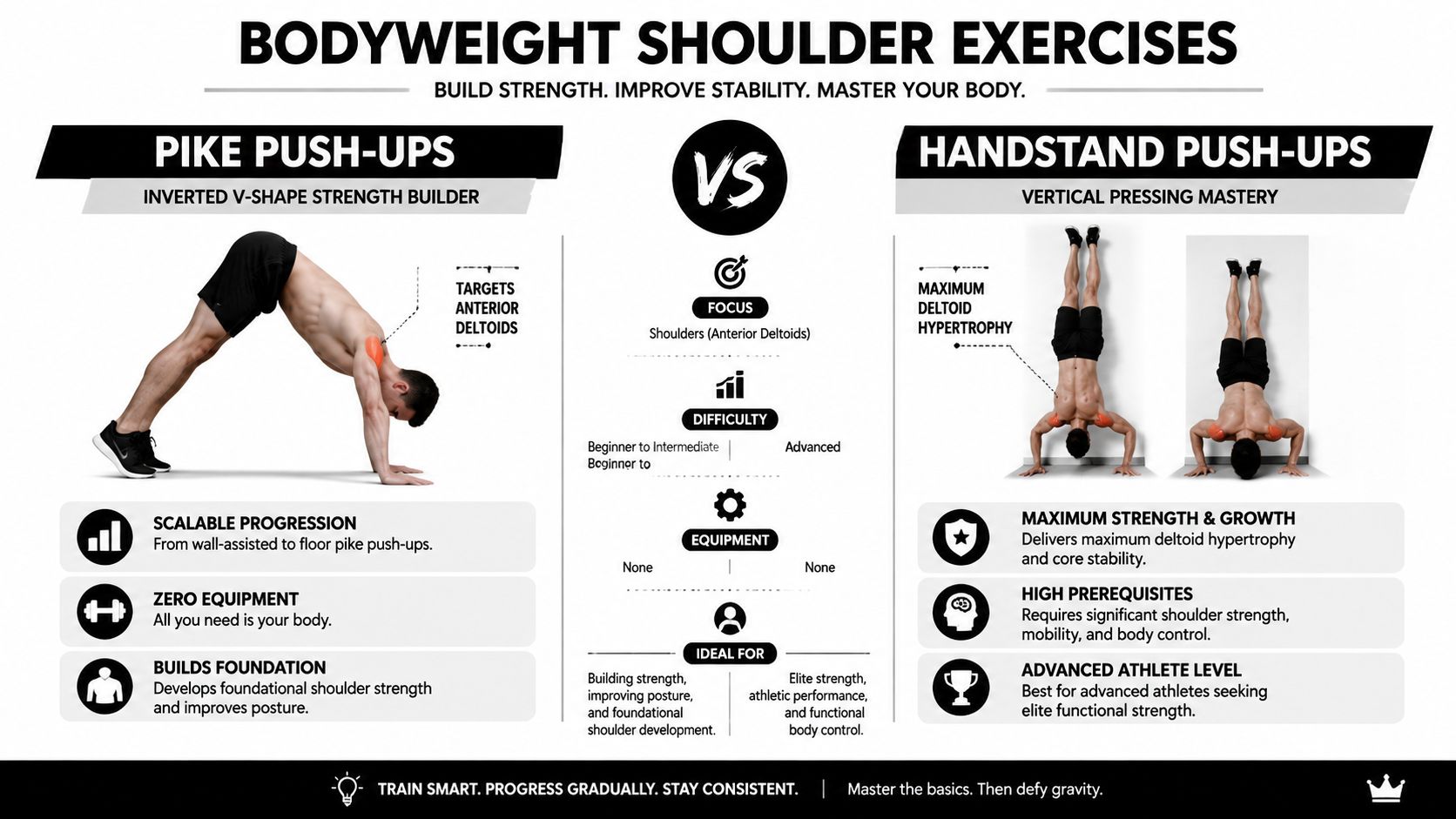
Pike push-ups shift more bodyweight towards the shoulders and provide a bridge towards vertical pressing. Begin with the hands on a stable raised surface or with a modest hip position. Bend the elbows and lower the head towards a point slightly in front of the hands, then press away.
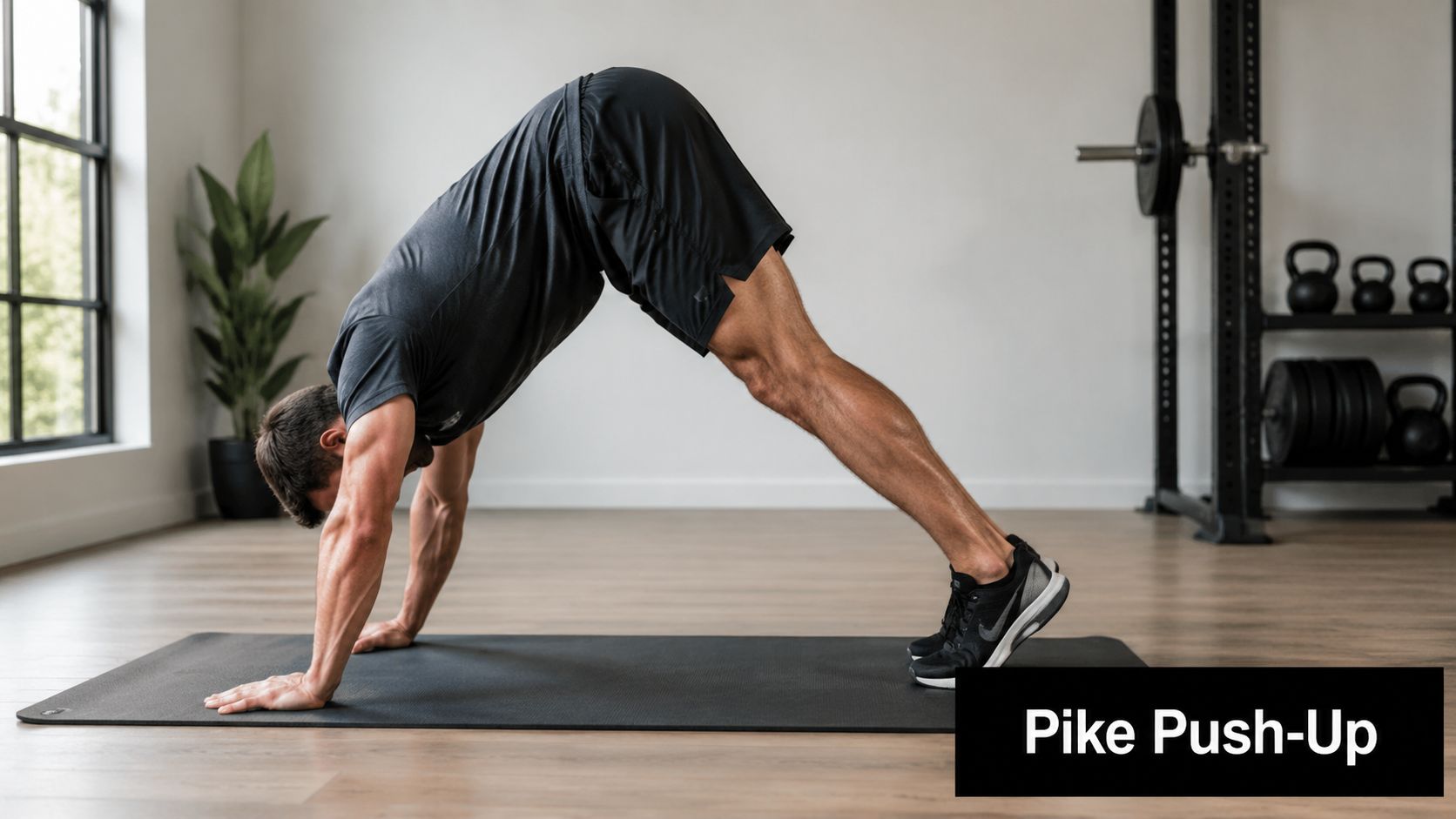
Progress by increasing the hip angle, range or elevation of the feet. Do not force depth if the front of the shoulder pinches or the neck takes the load.
8. Wall Handstand Holds
A wall handstand hold is an optional advanced skill, not a requirement for shoulder health. It demands wrist tolerance, overhead range, trunk control and a safe way to exit.
First develop pike pressing and partial inverted holds. Use a clear wall area, a non-slip surface and, ideally, qualified coaching. Never place the top of the head on the floor to support bodyweight unless following an appropriately supervised progression.
Avoid inversion if a clinician has advised against it. Seek individual guidance if you have uncontrolled high blood pressure, glaucoma or another condition affected by inversion, or if you experience dizziness, visual disturbance or unusual head pressure.
Exercise Comparison
| Exercise | Primary demand | Starting level |
|---|---|---|
| Wall slide | Arm-elevation control | Beginner |
| Prone Y/T raise | Low-load posterior shoulder and scapular work | Beginner |
| Scapular push-up | Scapular movement under load | Beginner to intermediate |
| Push-up | Horizontal pressing | Scalable |
| Shoulder tap | Single-arm support and trunk control | Intermediate |
| Bear crawl | Repeated weight transfer | Intermediate |
| Pike push-up | Shoulder-dominant pressing | Intermediate to advanced |
| Wall handstand hold | Inverted overhead support | Advanced |
Putting the Exercises Together
Select three or four exercises rather than performing all eight. A general session could include:
- wall slides: 1–2 sets of 6–10 controlled repetitions;
- scapular push-ups: 2 sets of 8–15;
- incline or floor push-ups: 2–4 challenging sets;
- pike push-ups or shoulder taps: 2–3 sets.
Finish most strength sets with approximately one to three good repetitions still possible. Progress one variable at a time and allow recovery according to total training load and symptoms.
Bodyweight pressing provides limited pulling overload. Add rows, pull-downs, pull-ups or suitably loaded band work elsewhere in the week. If buying exercise bands, use a product designed for exercise and inspect it for wear. This Nothing But Bands Fitbit strap article concerns watch-strap materials, not exercise-band selection or shoulder rehabilitation.
Stop and seek assessment after trauma, visible deformity, sudden weakness, inability to raise the arm, persistent numbness or tingling, or severe swelling. Recurrent or worsening pain should also be assessed rather than managed by repeatedly changing internet exercises.
The content in this article is for educational purposes only and does not constitute medical or dietary advice. If you have an underlying health condition, are taking medication, or are considering significant changes to your diet or exercise regimen, consult a qualified healthcare professional before making any adjustments.