
Chest and Bicep Workout: Build Strength
23 August 2026Updated 25 August 2026

A chest-and-biceps workout can build strength and muscle when it provides enough challenging work, progresses over time and fits within a balanced whole-body programme. Exercise variety matters less than consistent training, appropriate effort and recovery.
Table of Contents
- What Makes the Workout Effective?
- Exercise Order and Technique
- A Scalable Chest-and-Biceps Session
- Progression and Weekly Volume
- Measuring Progress
- Pain and Safety
What Makes the Workout Effective?
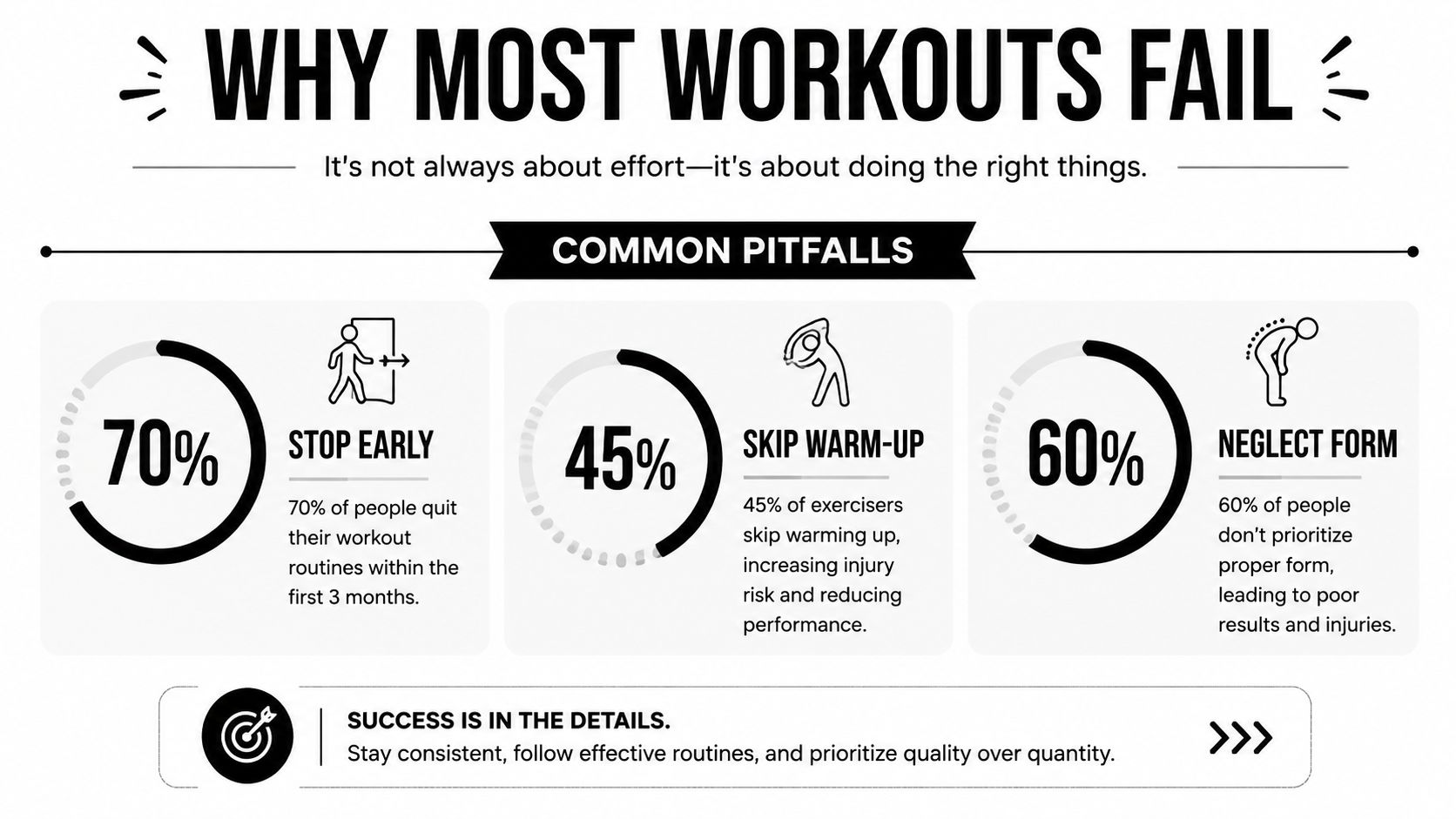
The first requirement is regular resistance training. In the 2021 Health Survey for England, 32% of adults met the muscle-strengthening guideline, including 36% of men and 29% of women. The survey’s physical-activity report found that 30% met both aerobic and muscle-strengthening recommendations.
Current UK Chief Medical Officers’ guidance recommends strengthening all major muscle groups on at least two days each week. A chest-and-biceps session can contribute, but the wider programme should also train the back, shoulders, legs and trunk.
For muscle growth, the 2026 American College of Sports Medicine position stand highlights weekly volume as an important variable, with approximately 10 sets per muscle group per week a useful general target for maximising hypertrophy. Beginners can improve with less, while experienced trainees may use more if recovery and performance remain good.
Loads from approximately 30% to 100% of one-repetition maximum can stimulate hypertrophy when sets are sufficiently challenging. Heavier loads are generally more specific to maximal strength. There is no requirement to remain within 6–12 repetitions for every exercise.
Exercise Order and Technique
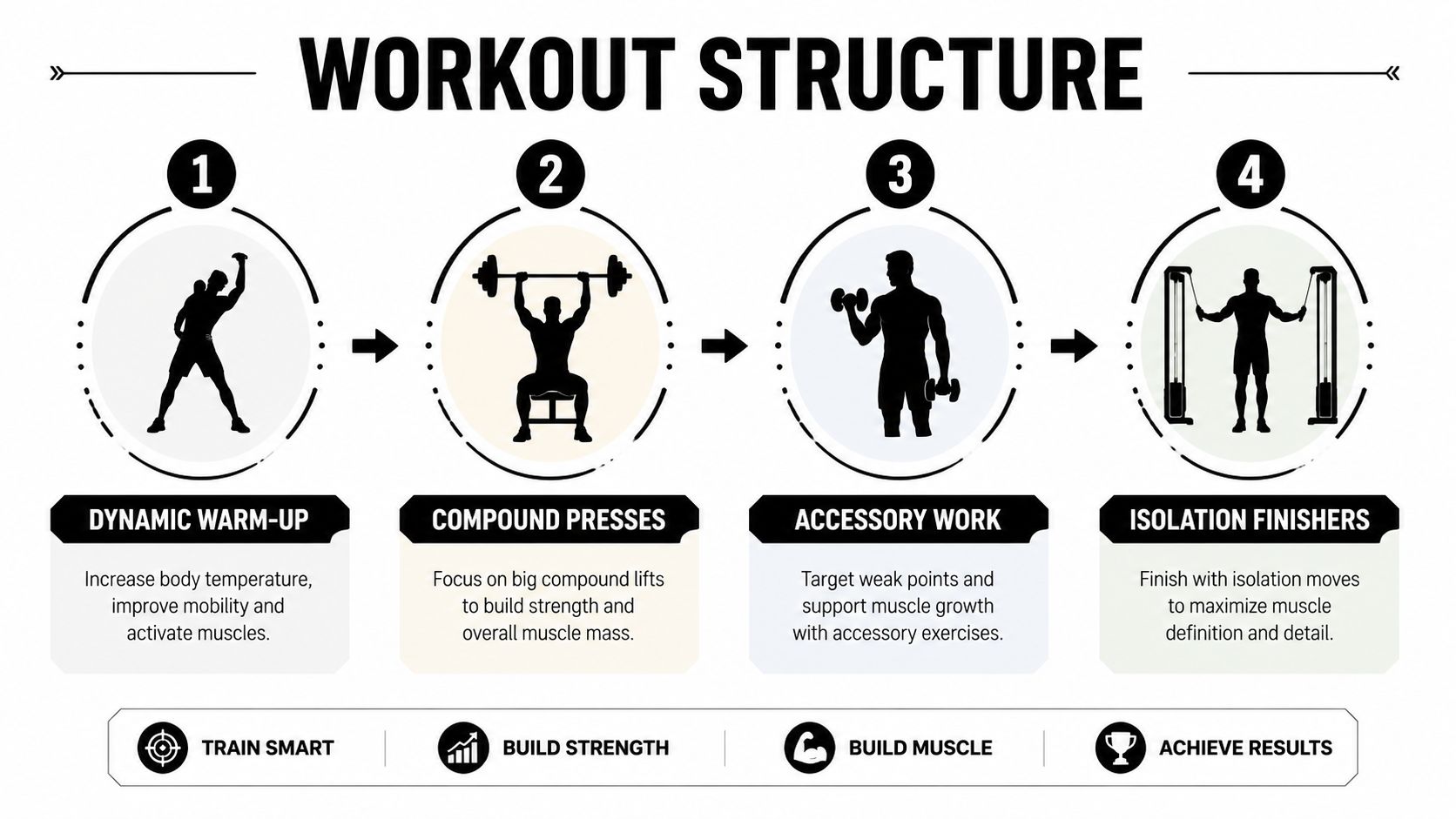
Place the exercise you most want to improve early in the session. A systematic review found that strength gains tend to be greatest in exercises performed first, while exercise order had little effect on hypertrophy. Most people will therefore begin with a press, but someone prioritising curl strength could reasonably start with curls.
Warm up with several minutes of general movement, comfortable shoulder motion and progressively heavier practice sets of the first exercise. A warm-up should improve readiness without causing fatigue.
Pressing technique
For bench pressing, keep the feet stable, wrists stacked over the forearms and upper back supported. Use a controlled range that does not provoke pain. Dumbbells allow each arm to find a comfortable path, while a floor press limits shoulder extension.
For push-ups, keep the head, trunk and legs aligned. Raising the hands reduces the load; elevating the feet or adding external resistance increases it. Knee push-ups are another option, provided the trunk remains controlled.
Curl technique
Use a barbell, dumbbells, cable or resistance band. Keep the shoulder position stable and avoid using repeated trunk movement to accelerate the load. A neutral-grip hammer curl may feel more comfortable for some wrists and elbows.
The Nottinghamshire Fire and Rescue Service resistance-training guide gives accessible occupational-fitness examples. Its set and repetition ranges are practical options, not the only evidence-based way to train.
A Scalable Chest-and-Biceps Session
| Exercise | Sets | Repetitions | Rest |
|---|---|---|---|
| Bench press, dumbbell press or push-up | 3 | 5–10 | 2–3 minutes |
| Incline press or supported machine press | 2–3 | 8–15 | 1.5–3 minutes |
| Cable or band fly, optional | 1–2 | 10–20 | 1–2 minutes |
| Dumbbell, barbell or cable curl | 2–3 | 6–12 | 1.5–2 minutes |
| Hammer or supported curl | 2 | 10–15 | 1–2 minutes |
Most working sets should finish with approximately one to three good repetitions still possible. Training to momentary failure is not consistently required for strength or hypertrophy and can add fatigue. Selective failure on a low-risk isolation exercise may be reasonable for an experienced lifter.
Beginners can start with two sets per exercise and omit the fly. More experienced trainees should count pressing performed elsewhere in the week before adding volume. Pull-ups and rows also train the elbow flexors, so they contribute indirectly to biceps workload.
A dedicated chest-and-biceps session should not displace pulling work. Include rows, pull-downs or pull-ups elsewhere in the week, along with lower-body and shoulder training.
Progression and Weekly Volume
Keep an exercise stable long enough to learn it. When every set reaches the top of the repetition range with consistent technique and the planned repetitions in reserve, increase the load by the smallest practical amount. If performance falls for several sessions, review sleep, total volume, nutrition and pain before adding work.
A simple two-day upper-body structure might use this chest-and-biceps session on one day and a back, shoulder and triceps emphasis on another. A full-body routine may be more efficient for people training only twice weekly.
Muscle soreness is not required for growth. Recovery time varies with volume, effort, training history and exercise. Repeat a muscle group when performance and symptoms are compatible with good-quality training rather than applying a universal 48-hour rule.
Measuring Progress
Start with a training log. Record load, repetitions, sets, range of motion and approximate repetitions in reserve. Strength and repetition improvements are often visible before body-composition changes.
A DEXA body-composition scan can estimate whole-body and regional lean soft tissue, fat mass and bone mineral density. It cannot isolate the pectoralis or biceps, directly measure muscle, or prove that a particular workout caused a change. Small regional differences may reflect positioning, hydration or measurement variability.
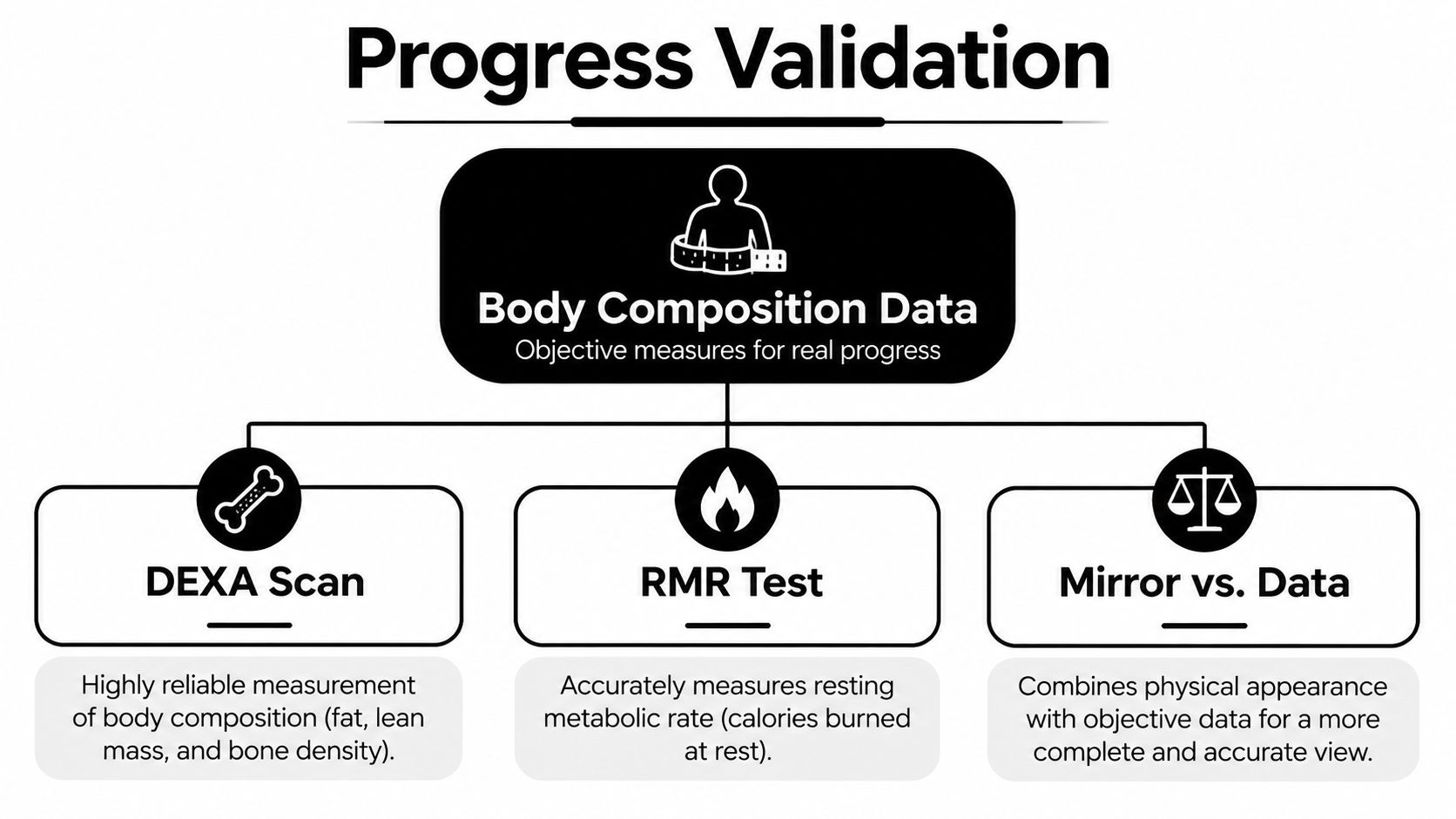
An RMR test estimates resting energy expenditure and may help establish an energy-intake starting point during a muscle-gain or fat-loss phase. It does not measure total daily expenditure or prescribe a complete diet. Activity, appetite, weight trend and performance still need review.
The commercial Move Together Fitness progress-tracking article offers ideas for organising measurements. Use the same method and similar conditions when comparing results.
This commercial Atlanta Hyperbaric Center recovery article discusses several recovery practices. The essentials remain appropriate training load, adequate energy and protein, sleep and management of injury or illness; recovery products do not compensate for poor programming.
Pain and Safety
Stop the exercise and reduce the load or range if pain is sharp or worsening. Seek prompt assessment after trauma, visible deformity, a sudden loss of strength, inability to move the arm normally, persistent numbness or tingling, or severe swelling. Pain that persists or repeatedly returns also warrants assessment by an appropriate clinician.
Use a spotter or safety arms for heavy barbell bench pressing. Secure resistance bands and check them for damage before use. People with cardiovascular disease, uncontrolled blood pressure or other relevant medical conditions should ask a clinician about suitable resistance-training intensity.
The content in this article is for educational purposes only and does not constitute medical or dietary advice. If you have an underlying health condition, are taking medication, or are considering significant changes to your diet or exercise regimen, consult a qualified healthcare professional before making any adjustments.