
Unprocessed Foods Diet: Evidence & Practical Guide
12 August 2026Updated 19 August 2026
Choosing more minimally processed food can be a useful way to improve diet quality, make meals more filling and support weight management. It is not a magic fix, and “processed” does not automatically mean unhealthy. The practical goal is to build most meals from nutritious staples while keeping convenience, affordability and personal needs in view.
Table of Contents
- What an Unprocessed Foods Diet Means
- What the Clinical Evidence Shows
- How to Build Balanced Meals
- Shopping on a Budget
- Measuring Progress Safely
- Common Questions
What an Unprocessed Foods Diet Means
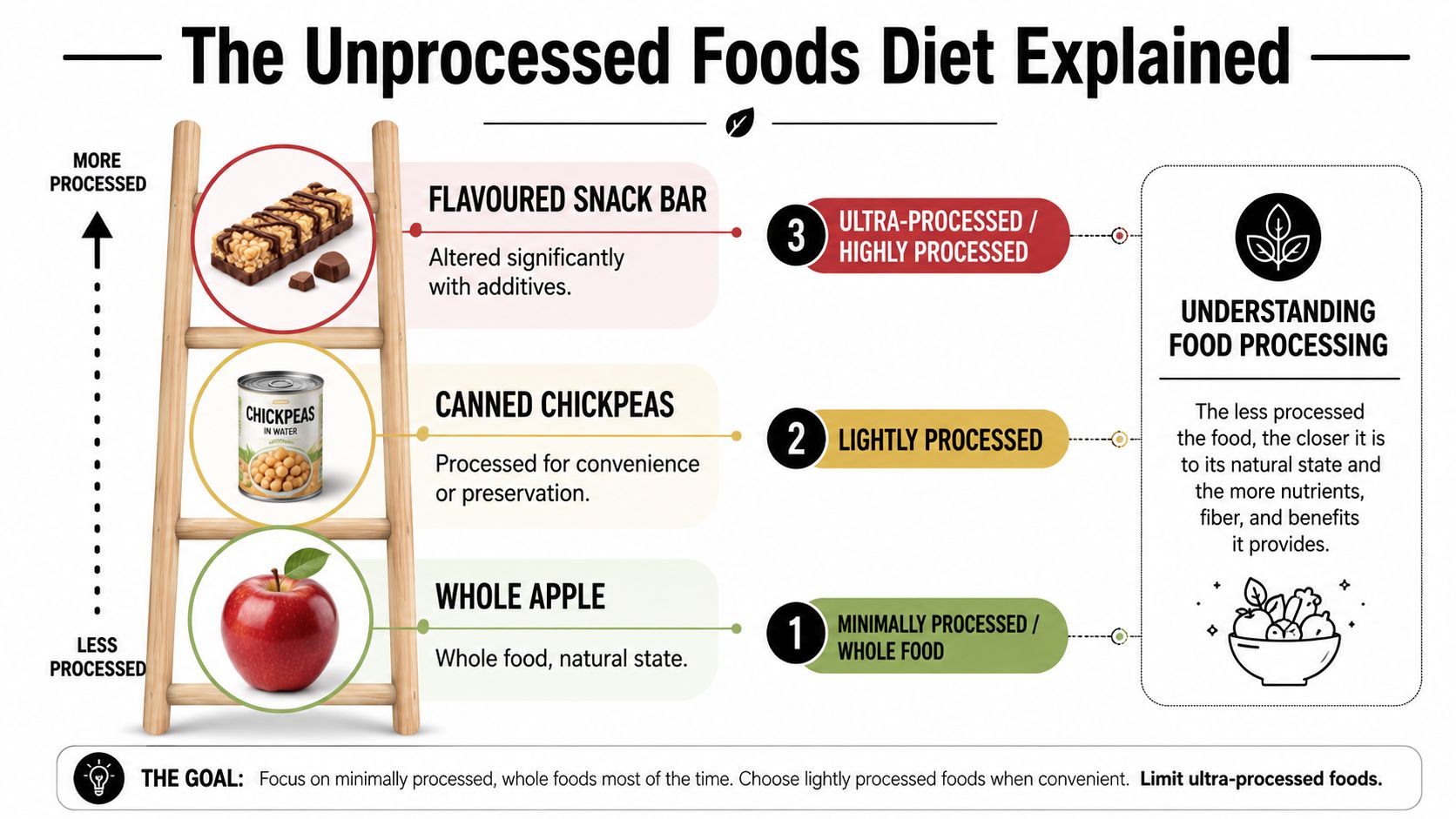
In everyday use, an “unprocessed foods diet” usually means a pattern based mainly on unprocessed or minimally processed foods. Examples include fruit, vegetables, potatoes, oats, rice, beans, lentils, eggs, plain yoghurt, nuts, seeds, fish and unprocessed meat.
Processing is not inherently harmful. Freezing, pasteurising, fermenting and canning can make food safer, more affordable and easier to store. Frozen vegetables, canned pulses, tinned fish, plain yoghurt and wholemeal bread can all contribute to a healthy diet.
Researchers often use the NOVA system, which groups foods according to the nature, extent and purpose of industrial processing. Its fourth category, ultra-processed food, generally includes industrial formulations made from multiple ingredients, often with substances not normally used in a home kitchen. However, classification is not always straightforward, and the UK Scientific Advisory Committee on Nutrition has highlighted limitations in the evidence and in processing-based classification systems.
Practical principle: judge the whole food and the overall diet, not the packet alone. Nutrient content, portion, frequency and what the food replaces all matter.
Questions about production methods can still help people think more carefully about food choice. For example, this commercial guide compares grass-fed and conventional beef. Production method does not make either option essential, and red and processed meat intake should still be considered within the overall diet.
What the Clinical Evidence Shows
The best-known controlled study was a 2019 US National Institutes of Health metabolic-ward trial involving 20 weight-stable adults. Participants were offered either an ultra-processed or unprocessed diet for two weeks, followed immediately by the other diet for two weeks. Presented diets were matched for several nutrients, but people ate about 508 kcal more per day during the ultra-processed phase. They gained about 0.9 kg during that phase and lost about 0.9 kg during the unprocessed phase. The small sample, short duration and inpatient setting limit how far the result can be generalised.
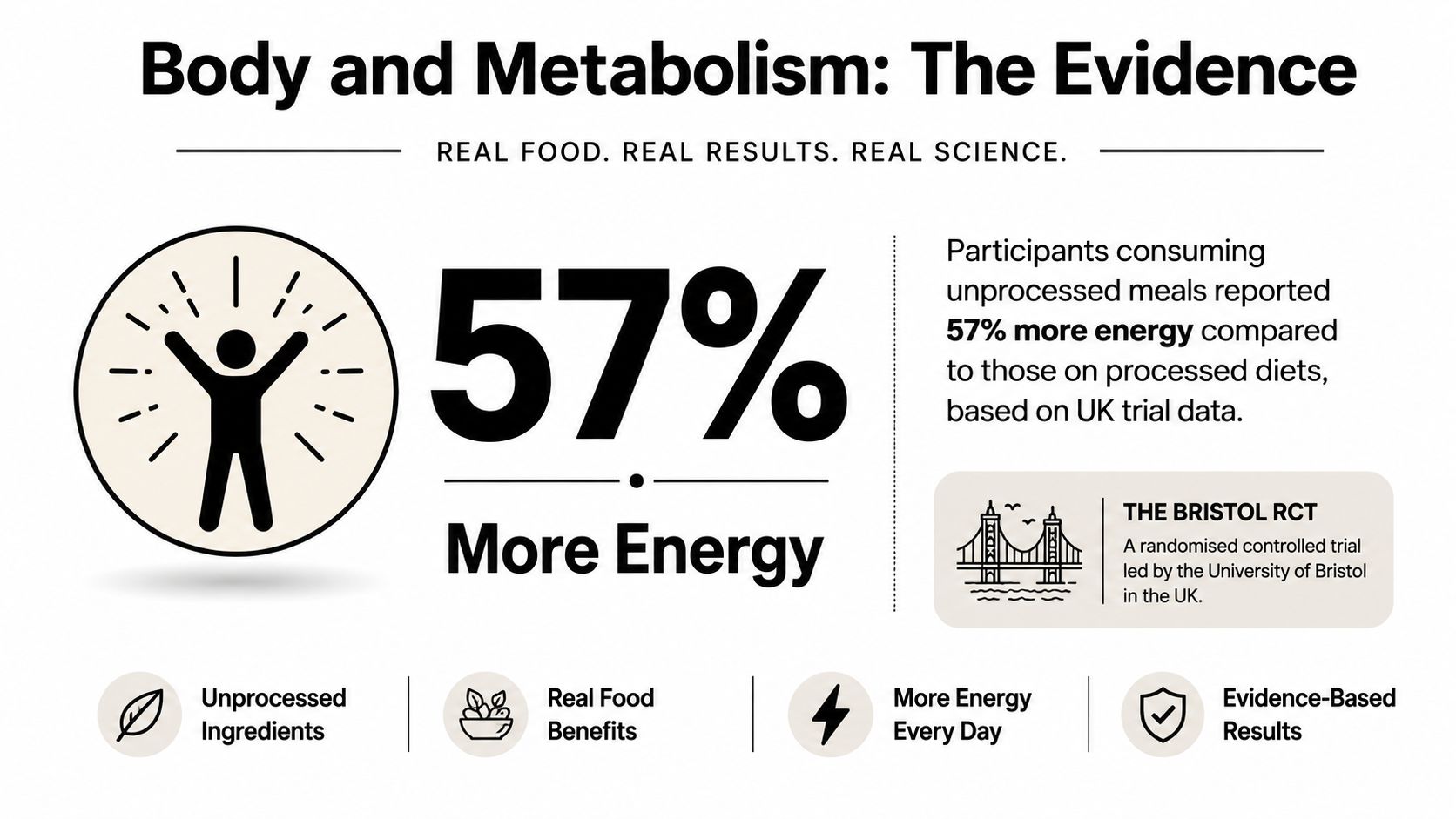
A 2026 post-hoc analysis led by researchers at the NIHR Bristol Biomedical Research Centre examined meal choices from that same trial. On the unprocessed diet, participants ate meals that were 57% greater by weight yet contained less energy on average: approximately 719 kcal versus 830 kcal per meal. This does not mean they consumed 57% more energy. The meals contained more low-energy-density food, particularly fruit and vegetables, which helped explain how participants could eat a larger mass of food while consuming fewer calories.
Those findings support a plausible practical lesson: meals rich in vegetables, fruit and other lower-energy-density foods can provide a satisfying volume for fewer calories. They do not prove that processing level is the only cause. Eating rate, texture, energy density, protein, fibre, palatability and the range of foods offered may all influence intake.
More recently, a 2025 randomised crossover trial in England compared two eight-week diets that both followed the UK Eatwell Guide. Fifty participants with overweight or obesity were included in the intention-to-treat analysis. Mean weight change was about -2.06% on the minimally processed diet and -1.05% on the ultra-processed diet, a statistically significant difference of around one percentage point. Both diets produced weight loss, and the minimally processed phase also produced greater improvement in several measures of food craving.
This is useful evidence, but it does not establish that every ultra-processed product is harmful or every minimally processed food is healthy. The participants already obtained at least half their usual energy from ultra-processed food, and the trial lasted eight weeks per diet. Longer studies in broader populations are still needed.
How to Build Balanced Meals
You do not need to eliminate every convenience food. A more sustainable approach is to make minimally processed foods the foundation and use other products where they make the diet easier to maintain.
A simple meal template
- Protein: beans, lentils, eggs, fish, plain yoghurt, tofu, chicken or another suitable option.
- High-fibre carbohydrate: potatoes with skins, oats, brown rice, wholegrain pasta or wholemeal bread.
- Fruit or vegetables: fresh, frozen or canned varieties without excessive added salt or sugar.
- Unsaturated fat: nuts, seeds, olive or rapeseed oil, or avocado.
For breakfast, try porridge with fruit and seeds or plain yoghurt with fruit and nuts. Lunch might be lentil soup with wholemeal bread, leftover chicken with rice and vegetables, or a bean and grain bowl. Dinner could be fish, tofu or eggs with potatoes and two vegetables.
Raw black chia seeds are one commercial ingredient that can be added to porridge or yoghurt. They provide fibre and unsaturated fat, but they are not required and should not be treated as a treatment or “superfood”. Less expensive seeds can play a similar culinary role.
If you increase fibre substantially, do it gradually and drink enough fluid. People with gastrointestinal disease, food allergies, kidney disease or other medical dietary restrictions may need individual advice from a registered dietitian or clinician.
Avoid unnecessary rules
A rigid ban on processed food can make eating socially difficult and may reduce nutritional adequacy. Some fortified foods, specialist products and ready meals are valuable, particularly for people with limited time, disability, low appetite or specific nutritional needs. If attempts to “eat clean” create anxiety, guilt, compulsive label checking or avoidance of whole food groups, seek professional support.
Shopping on a Budget
Advice to cook everything from scratch ignores the real constraints of cost, time, transport, storage and kitchen access. A workable plan should reduce effort as well as improve food quality.
- Use frozen vegetables and fruit to reduce waste.
- Choose canned beans, lentils and fish for quick meals.
- Base several meals on low-cost staples such as oats, potatoes, rice and pulses.
- Buy own-brand products and compare unit prices.
- Cook extra portions only when storage and reheating are safe and practical.
- Keep convenient options available, such as low-salt soup, microwavable grains or a balanced ready meal.
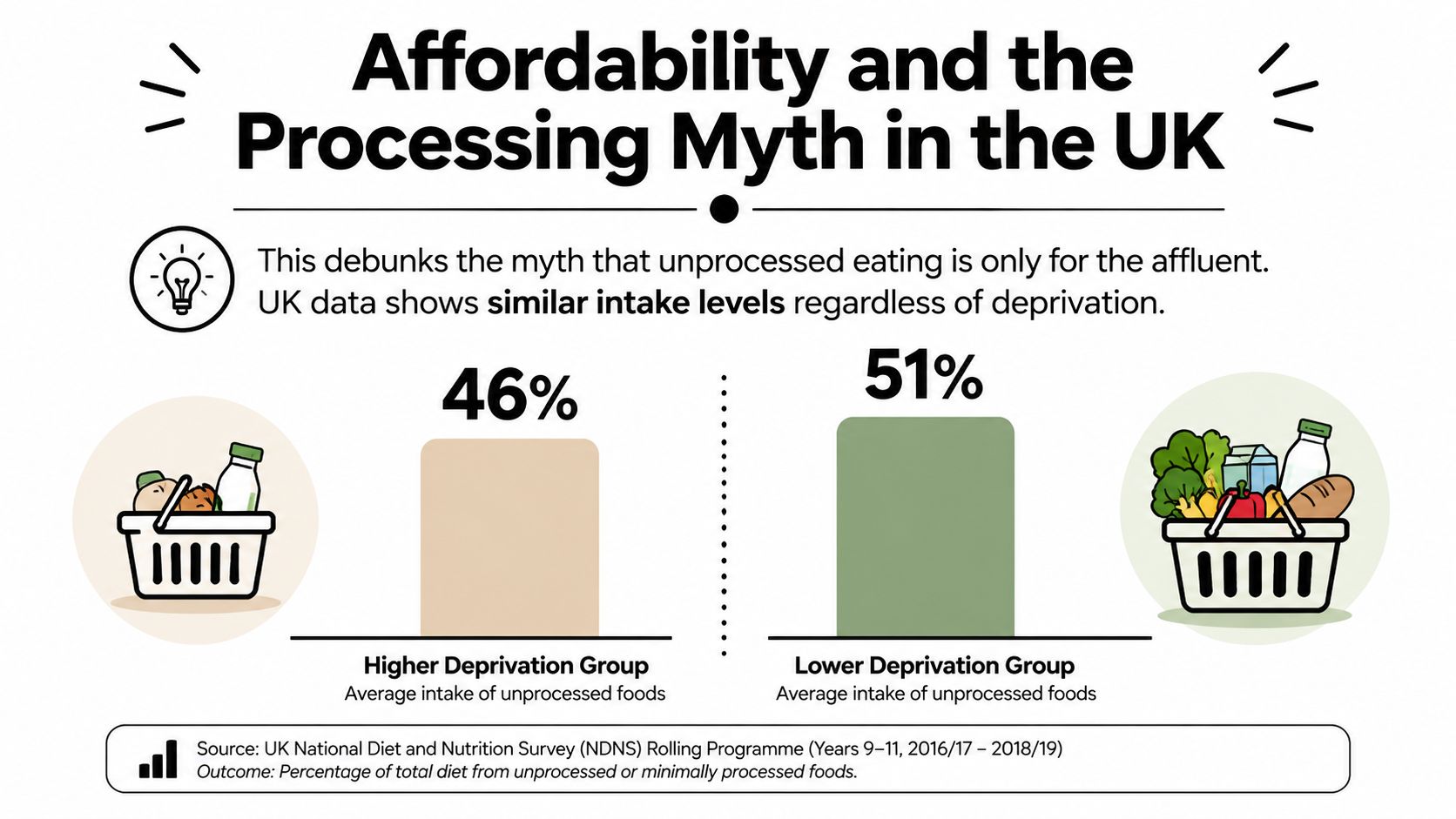
Ingredient lists can be informative, but length alone does not determine whether a product is healthy. Compare nutrition labels, paying attention to energy, fibre, protein, saturated fat, salt and free sugars where relevant. The UK Eatwell Guide remains a better foundation than a processing score on its own.
Measuring Progress Safely
Decide what success means before changing your diet. Depending on your goal, useful measures may include energy levels, training performance, bowel regularity, blood pressure, waist measurement or weight trend. One measurement should not dominate the picture.
If body composition is important, a DEXA body composition scan can estimate total and regional fat mass and lean soft tissue. It cannot show whether food processing caused a change, distinguish muscle from every other component of lean tissue, or replace clinical assessment. Hydration and measurement conditions can also affect interpretation, so repeat testing should use consistent conditions and a sensible interval.
Resting metabolic rate and VO2 max testing answer different questions. They may be useful for energy-planning or fitness goals, but neither directly tests whether an unprocessed-food pattern is working. Most people can start by improving meal balance and monitoring practical outcomes.
Common Questions
Are frozen and canned foods allowed?
Yes. They can be nutritious, affordable and convenient. Choose options that suit your needs, and compare salt, added sugar and sauces where relevant.
Do I need to avoid bread, tofu or yoghurt?
No. Processing category alone does not determine health value. Wholemeal bread, tofu and plain yoghurt can all fit a balanced diet.
Will eating minimally processed food guarantee weight loss?
No. Weight change still depends on energy balance over time, alongside medication, sleep, activity, health conditions and other factors. Minimally processed meals may make an appropriate energy intake easier for some people.
Can athletes follow this approach?
Yes, but energy and carbohydrate needs can be high. Convenient sports foods may be useful around training. Avoid letting processing rules cause under-fuelling.
What if my weight is not changing?
Review the whole pattern, including portions, drinks, activity and consistency. Seek medical advice for unexplained weight change, persistent fatigue, gastrointestinal symptoms, menstrual disturbance or other concerning symptoms.
Medical disclaimer: This article is for general information and education only. It is not a substitute for personalised medical or dietetic advice, diagnosis or treatment. Speak to a qualified healthcare professional before making major dietary changes, particularly if you have a medical condition, take medication, are pregnant or breastfeeding, or have a current or previous eating disorder.