
What Does Macros Mean: A Practical Nutrition Guide
11 August 2026Updated 19 August 2026

In nutrition and fitness, “macros” is short for macronutrients: protein, carbohydrate and fat. Tracking macros means estimating how many grams of each you eat. The numbers can help with performance or body-composition goals, but they are only one part of a healthy diet.
Table of Contents
- What Does Macros Mean?
- Protein, Carbohydrate and Fat
- How Many Calories Do Macros Provide?
- How to Set a Practical Macro Target
- How RMR and DEXA Can Help
- Tracking Without Obsessing
- Common Macro Myths
What Does Macros Mean?
The word macro has several meanings. In computing it can describe a stored sequence of instructions, and Microsoft explains how this works in its introduction to macros. In a conversation about food, however, “my macros” almost always means grams of protein, carbohydrate and fat.
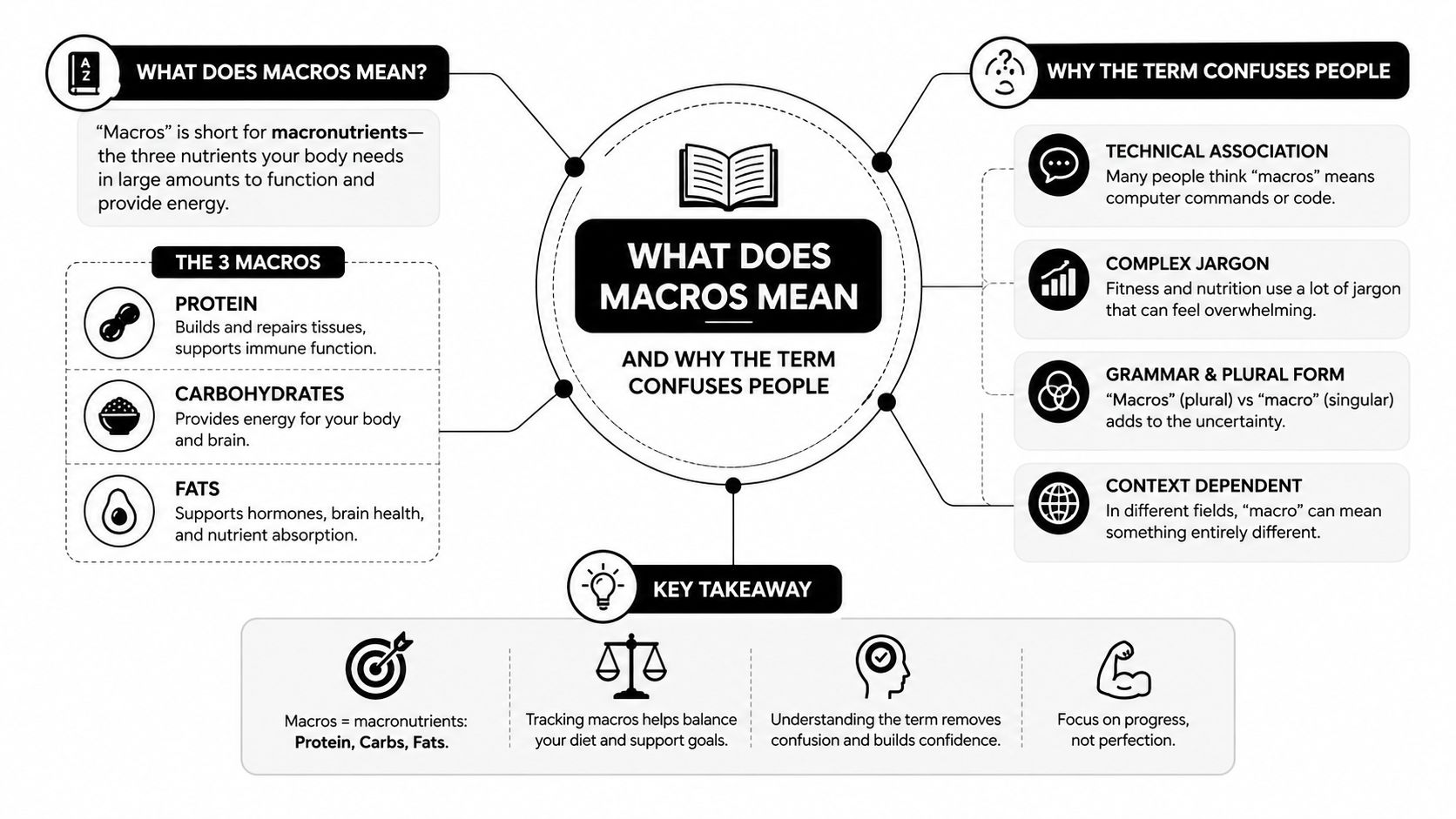
These three nutrients provide most of the energy in a typical diet and have important structural and metabolic functions. They do not capture everything that matters. Fibre, vitamins, minerals, food quality, hydration and meal pattern also affect health and performance.
Protein, Carbohydrate and Fat
Protein
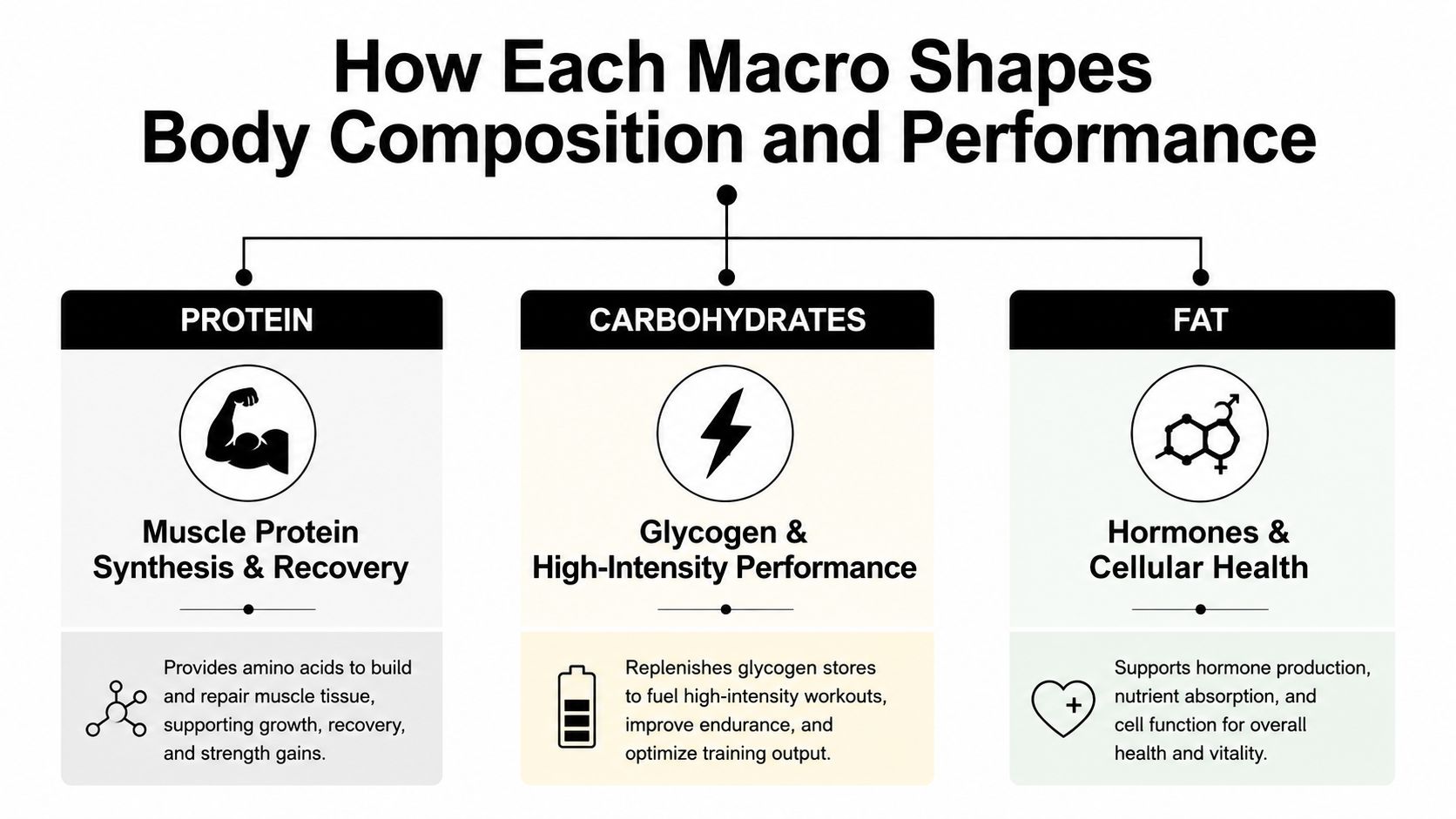
Protein supplies amino acids used to build and maintain muscle and other tissues, and to make enzymes, transport proteins and many signalling molecules. Good sources include fish, eggs, dairy foods, meat, beans, lentils, soya foods, nuts and seeds.
The UK reference nutrient intake for adults is 0.75 g per kilogram of body weight per day. This is a population reference for meeting basic needs, not an ideal target for every goal. People doing regular resistance training, dieting while trying to preserve lean mass, or managing some age-related conditions may benefit from more. A large meta-analysis found that the average additional benefit for resistance-training gains levelled off at around 1.6 g/kg/day, although individual requirements vary.
Protein alone does not build muscle. Progressive resistance training and sufficient total energy are also required. This commercial muscle-recovery guide discusses other recovery habits, but it should not replace individual medical or rehabilitation advice.
Carbohydrate
Carbohydrate is broken down mainly into glucose and can be stored as glycogen in muscle and liver. It is particularly useful for higher-intensity and prolonged exercise. Sources include potatoes, bread, rice, pasta, oats, fruit, beans, lentils, milk and yoghurt.
Carbohydrate foods differ substantially. Wholegrains, pulses, fruit and vegetables can provide fibre and micronutrients, whereas sugary drinks provide carbohydrate with little fibre. Carbohydrate is not automatically fattening, and lower-carbohydrate eating is not automatically superior. Total energy intake, food quality, preference and training demands all matter.
Fat
Dietary fat provides essential fatty acids, supports cell membranes and helps the body absorb vitamins A, D, E and K. Unsaturated fats from foods such as nuts, seeds, olive or rapeseed oil and oily fish are generally preferable to a pattern high in saturated fat.
Fat is energy dense, so portions can materially affect total intake. Its effect on fullness is not universal and depends on the meal and the person. It should not be driven unnecessarily low, but “more fat” is not automatically better for hormones or appetite.
How Many Calories Do Macros Provide?
For UK nutrition-labelling calculations, protein and carbohydrate each provide approximately 4 kcal per gram, while fat provides approximately 9 kcal per gram. The same headline figures appear in this USA Triathlon macros guide.
| Macronutrient | Approximate energy | Key functions |
|---|---|---|
| Protein | 4 kcal/g | Tissue maintenance, enzymes and signalling |
| Carbohydrate | 4 kcal/g | Energy and glycogen; fibre in many sources |
| Fat | 9 kcal/g | Essential fatty acids, membranes and vitamin absorption |
These are label conversion factors rather than exact measurements for every food. Fibre is assigned 2 kcal/g in UK label calculations, and alcohol supplies approximately 7 kcal/g even though it is not normally included in a macro target. This is why calories calculated from only the three headline macros may not always match a label perfectly.
Example: 120 g protein, 250 g carbohydrate and 70 g fat contribute approximately 2,110 kcal before accounting for any separately treated fibre, alcohol or rounding.
How to Set a Practical Macro Target
There is no single evidence-based macro split for everyone. A useful order is:
- Estimate total energy needs.
- Choose a protein target appropriate to health, body weight and training.
- Keep enough fat to support nutritional adequacy and food preference.
- Use carbohydrate to meet the remaining energy and training demands.
Percentage splits can be misleading. At a low calorie intake, “30% protein” may still provide too little protein; at a high intake, it may be unnecessarily large. Grams per kilogram are usually more informative for protein, while carbohydrate can vary widely with exercise volume.
For general health, the quality of the sources matters as much as the split. Include vegetables and fruit, higher-fibre carbohydrates, varied protein sources and mostly unsaturated fats. A commercial list of higher-protein foods may offer meal ideas, but no single food guarantees fullness or weight loss.
People who train for endurance typically need more carbohydrate than sedentary people. Those doing resistance training should prioritise adequate protein, but more is not always better. Age by itself does not dictate a low-carbohydrate diet. Medical conditions, medication, pregnancy, gastrointestinal tolerance and personal culture may all change the plan.
How RMR and DEXA Can Help
An online calculator can provide a reasonable starting estimate. A resting metabolic rate test measures oxygen consumption and carbon-dioxide production to estimate energy expenditure at rest. It does not measure total daily energy expenditure. Activity, exercise and the thermic effect of food still need to be estimated, and day-to-day needs vary.
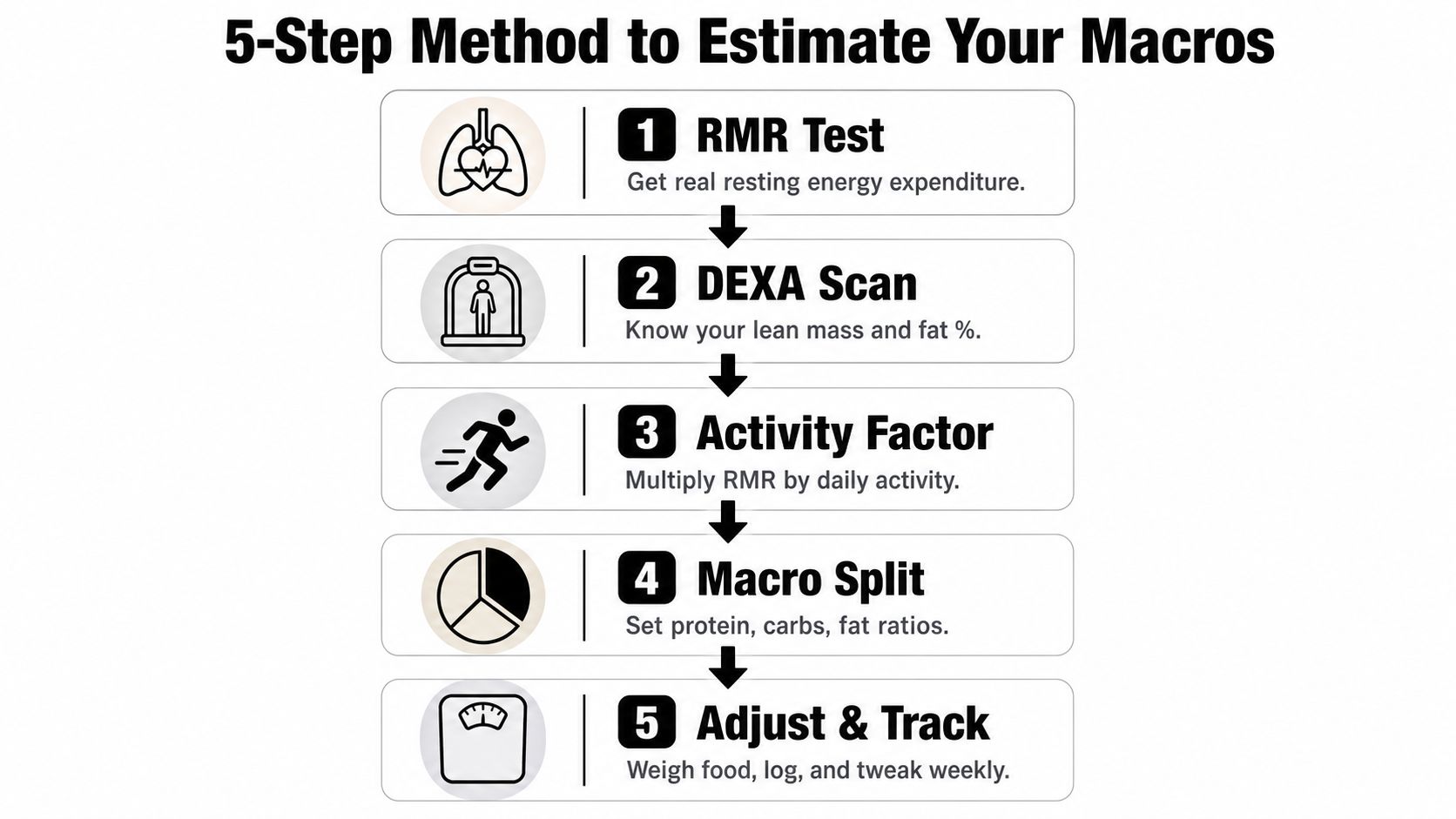
A DEXA scan estimates fat mass, bone mineral content and lean soft tissue. It does not directly measure skeletal muscle, and there is no universal formula that converts DEXA lean mass into a precise protein prescription. It can provide a body-composition baseline when that information is clinically or practically useful, but trends should be interpreted alongside training, health, hydration and measurement conditions.
Use measured data to refine an estimate, not to create false precision. A nutrition professional can help translate the results when goals are complex.
Tracking Without Obsessing
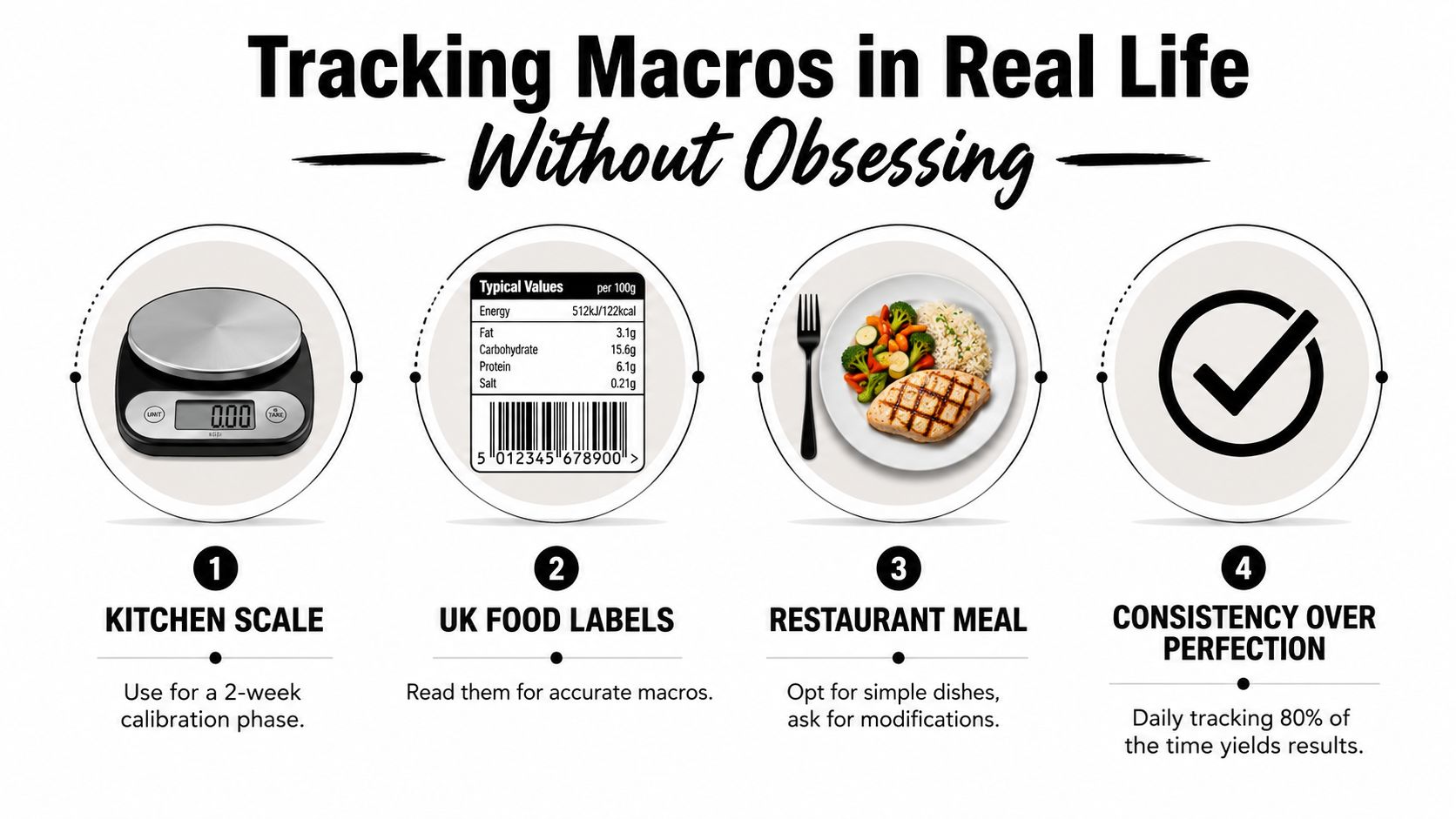
Macro tracking is optional. Some people find a short period useful for learning portions and protein content. Others do better with a plate method or repeatable meal templates.
- Use UK labels, which usually show values per 100 g and often per portion.
- Weigh a few common foods temporarily if you need to calibrate portions.
- Focus first on protein, fibre-rich foods and overall energy rather than perfect daily numbers.
- Review trends over several weeks, not a single weigh-in or meal.
- Make one modest change at a time and allow enough time to assess it.
Tracking can be unsuitable for anyone with a current or previous eating disorder, compulsive exercise, significant food anxiety or distress around numbers. Stop if it increases restriction, guilt or preoccupation, and seek support from a qualified professional.
Common Macro Myths
“Carbohydrate automatically causes fat gain.”
No. Sustained energy surplus is the primary driver of fat gain, while carbohydrate can support training and recovery.
“High protein damages everyone’s kidneys.”
Short-term trials in adults without chronic kidney disease have not shown consistent biochemical evidence of kidney injury, but long-term evidence at very high intakes remains limited. People with kidney disease, kidney stones or relevant medical risks should get individual clinical advice.
“Calories do not matter if the macros are right.”
Macro grams determine much of the energy intake, so the two cannot be separated. Food quality and adherence also affect health and how easy the plan is to follow.
“You must hit exact numbers every day.”
No. Approximate ranges and a consistent weekly pattern are adequate for most people.
“DEXA and RMR produce a perfect meal plan.”
No. They provide measurements that may improve an estimate; they do not replace clinical judgement, dietary assessment or ongoing adjustment.
Medical disclaimer: This article is for general information and education only. It is not a substitute for personalised medical or dietetic advice, diagnosis or treatment. Speak to a qualified healthcare professional before making major dietary changes, particularly if you have a medical condition, take medication, are pregnant or breastfeeding, or have a current or previous eating disorder.