
What Is Zone 2 Training? a Practical Guide for 2026
25 August 2026

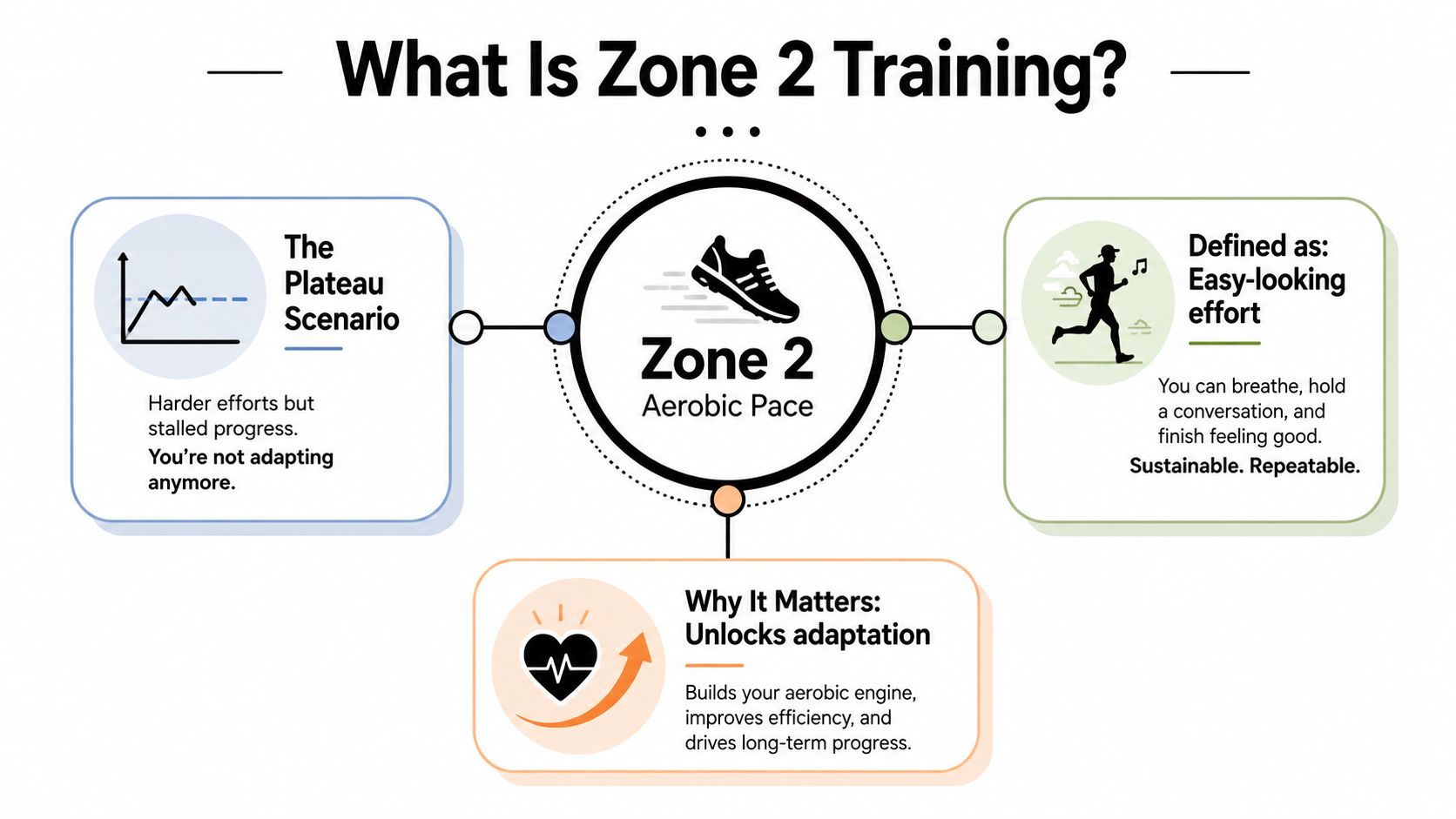
Zone 2 training is sustained aerobic exercise performed below the first lactate or ventilatory threshold, known as LT1 or VT1. It should feel controlled: breathing is clearly elevated, but conversation remains comfortable. Heart-rate percentages can provide a starting estimate, but no single percentage identifies Zone 2 accurately for everyone.
Table of Contents
- What Is Zone 2 Training?
- What Happens in Zone 2?
- How to Find Zone 2
- Benefits and Limitations
- How to Programme Zone 2
- Testing and Safety
- Frequently Asked Questions
What Is Zone 2 Training?
Training zones are not standardised. A watch, coach and laboratory may use the same zone number for different intensity ranges. In the five-zone model popular in endurance sport, Zone 2 usually describes the upper part of the moderate-intensity domain, ending near LT1 or VT1.
A 2025 expert viewpoint on Zone 2 reached consensus that the preferred intensity sits immediately below the first lactate or ventilatory threshold. Expected responses included stable heart rate, low perceived exertion and little or only a transient rise in blood lactate. The authors also stressed that the adaptations are not unique to this narrow zone.
Heart-rate percentages are less reliable. BBC Bitesize’s training-zone guide presents the traditional 60–70% of maximum heart-rate model. Other five-zone systems place Zone 2 higher. A 2025 comparison of Zone 2 markers found substantial disagreement between heart rate, ventilatory thresholds, blood lactate and power-based definitions.
Practical definition: use a comfortable conversational effort as the starting point, and use a measured LT1 or VT1 when precision matters.
What Happens in Zone 2?
Aerobic metabolism supplies most of the required energy, using both fat and carbohydrate. The contribution of each fuel changes continuously with intensity, diet, training status and session duration. There is no abrupt switch from aerobic to anaerobic metabolism at a zone boundary.
Repeated endurance training can improve mitochondrial function, capillary supply, plasma volume and the ability to sustain a given pace or power. Slow-twitch fibres make a substantial contribution, although muscle-fibre recruitment also exists on a continuum rather than changing at a precise threshold.
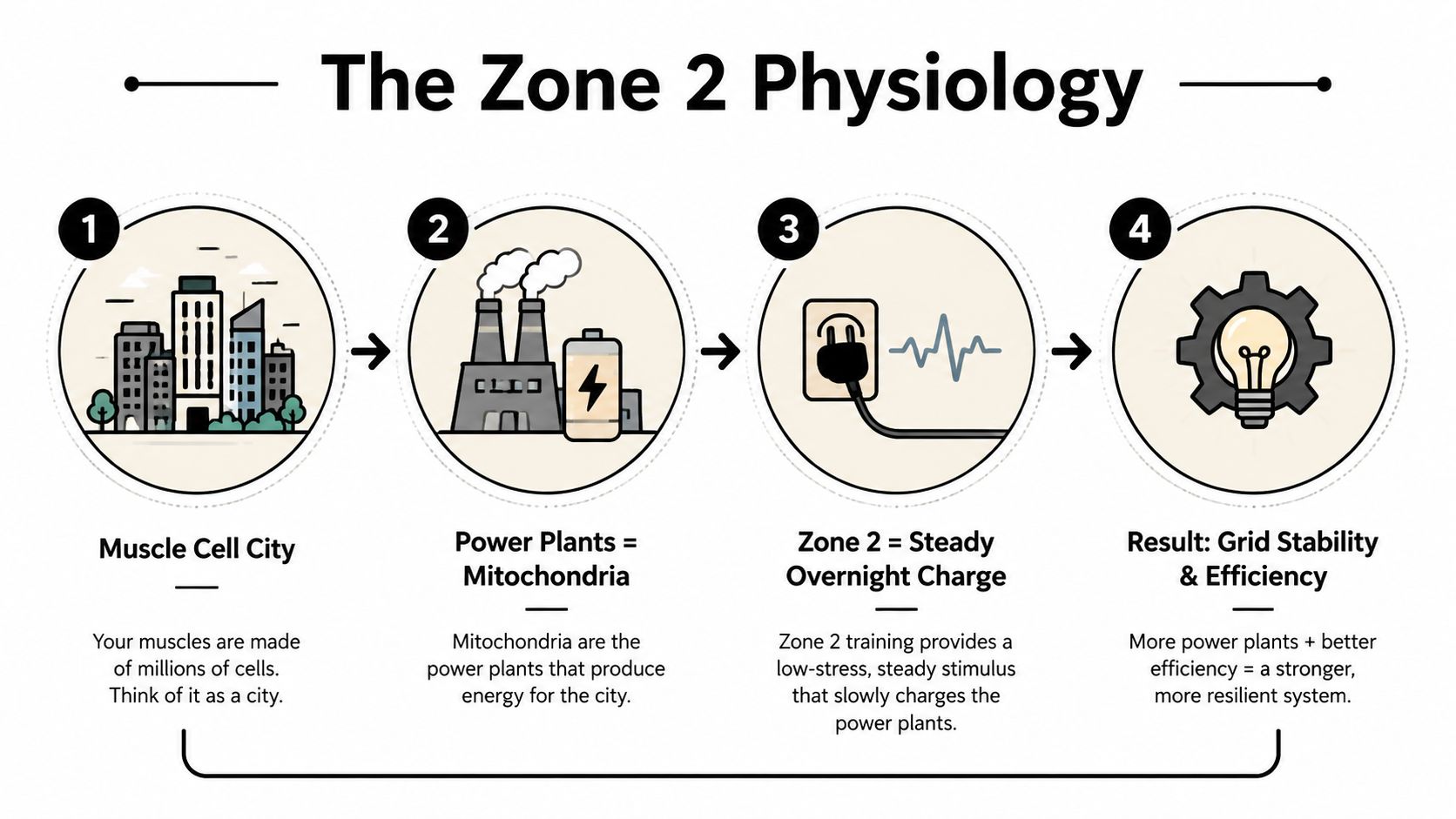
Zone 2 is useful because it allows a relatively large amount of aerobic work with less fatigue than threshold or interval sessions. It does not replace strength training, faster endurance work or sport-specific practice.
| Intensity | Typical feel | Main use |
|---|---|---|
| Below Zone 2 | Very easy; conversation unaffected | Warm-up, recovery and very long easy sessions |
| Zone 2 | Comfortable but purposeful; full sentences possible | Repeatable aerobic volume |
| Moderate or tempo | Conversation becomes broken | Sustained race-specific or tempo work |
| Threshold and above | Hard; speech limited | Threshold, VO2 peak, speed and power stimuli |
This practical training-zones document shows another commonly used framework. It can help illustrate the terminology, but it should not be treated as a universal physiological standard.
How to Find Zone 2
Use the talk test
The talk test is the most accessible option. Comfortable speech usually occurs below the first ventilatory or lactate threshold. Speak a normal sentence every few minutes. If you have to pause for breath, reduce the pace or resistance.
Use heart rate as a guardrail
Start with the range supplied by your device or programme, then compare it with breathing and perceived exertion. The Runner’s World UK guide to Zone 2 running describes the familiar percentage approach.
Age equations estimate maximum heart rate for populations, not individuals. Studies show wide limits of agreement between predicted and measured maximum heart rate. Beta blockers and some other medicines can also change heart-rate response. If the number conflicts with symptoms and effort, do not force the number.
Use power or pace carefully
Cyclists and rowers can use power, while runners can monitor pace. Both are affected by fitness, gradient, surface, heat and fatigue. Functional threshold percentages are estimates and should be updated when fitness changes.
Use laboratory testing when precision matters
A graded exercise test with breath-by-breath gas analysis can identify VT1 and relate it to heart rate, pace or power. A Telomyx VO2 max test includes this gas-exchange assessment. The measured value is still an estimate with biological and measurement variability, rather than a perfectly fixed boundary.
Benefits and Limitations
Zone 2 can improve aerobic fitness when it increases an appropriate training dose and is performed consistently. It is accessible by walking uphill, running, cycling, rowing or swimming, and its modest recovery cost makes it easier to combine with other training.
It is often promoted as a special “fat-burning zone”. Fat oxidation is important at moderate intensity, but using a greater proportion of fat during a session does not guarantee fat loss. Body-fat change depends on energy balance over time, nutrition, activity and individual health.
A critical narrative review concluded that evidence does not establish Zone 2 as uniquely optimal for mitochondrial capacity, fat oxidation or cardiorespiratory fitness. This High North discussion of the debate gives a commercial coaching perspective on the same limitation.
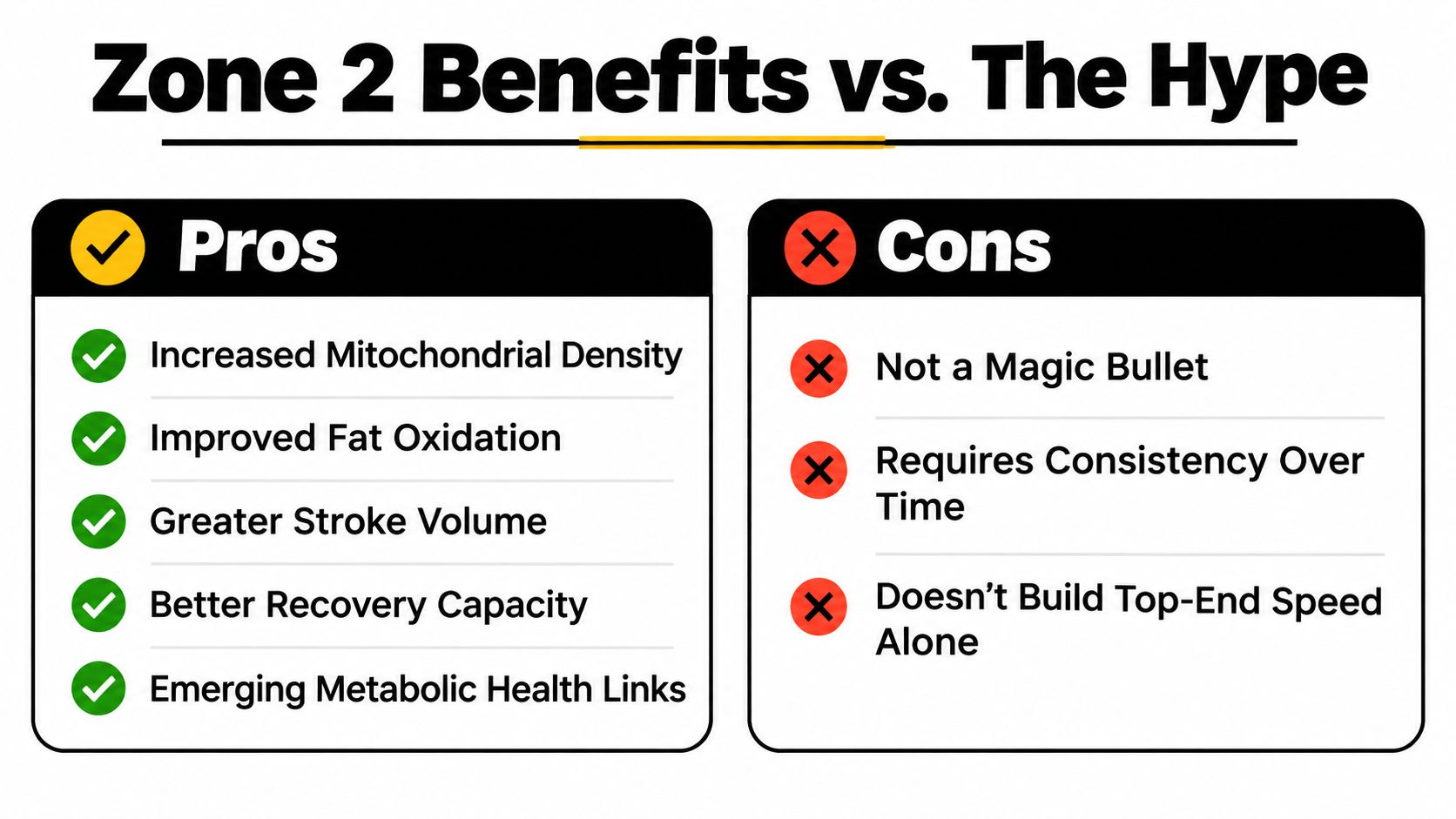
Research on trained endurance athletes often reports that most training is completed at low intensity. Some systematic reviews favour a distribution with approximately 75–80% low-intensity work and 15–20% high-intensity work for improving VO2 peak. That pattern is not a universal prescription for beginners, recreational exercisers or people with limited weekly training time.
The Lola Health article on VO2 max nutrition and recovery provides additional commercial guidance. Nutrition and recovery support training, but no food or supplement replaces an appropriate programme.
How to Programme Zone 2
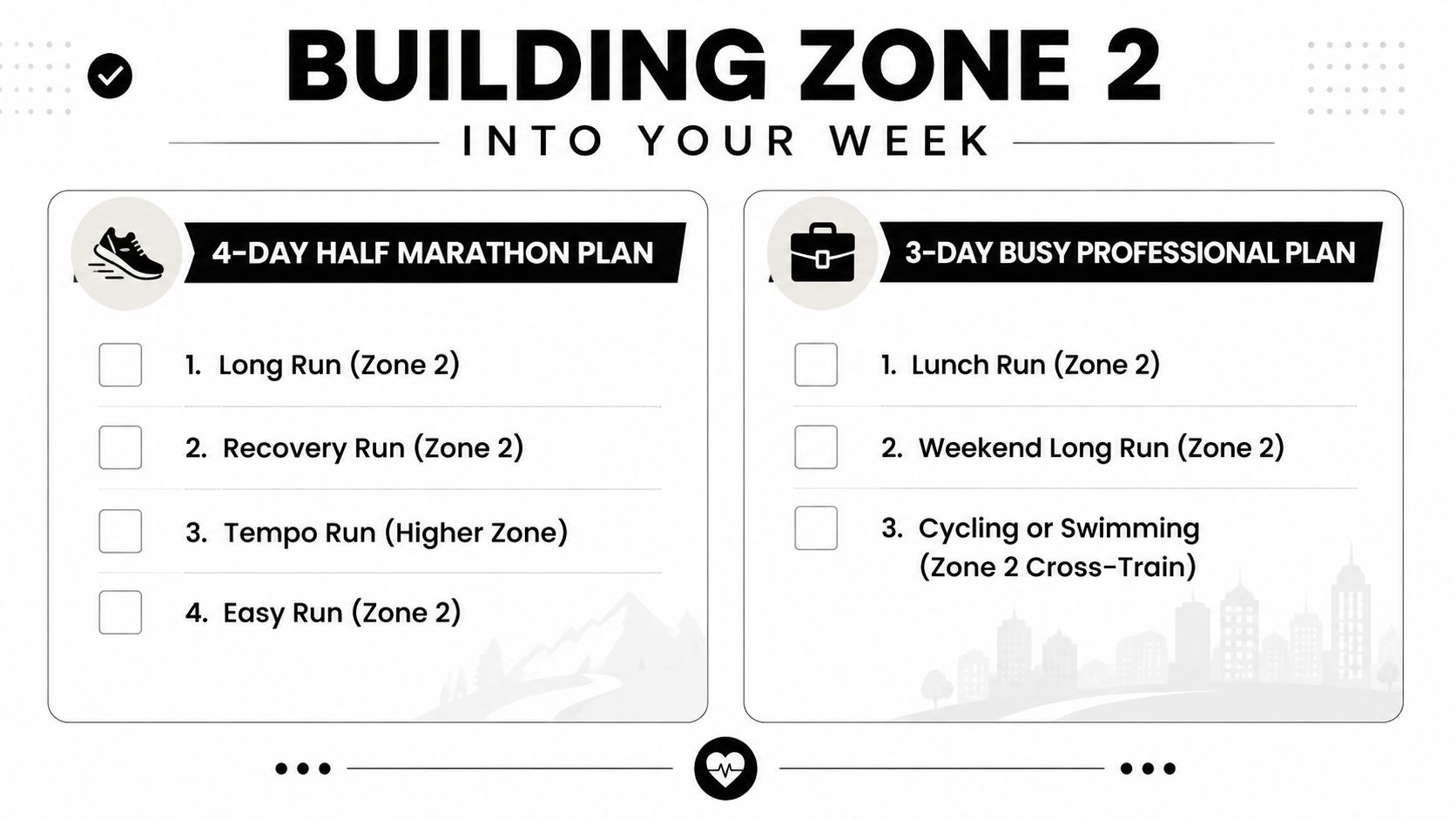
For a healthy beginner, start with one or two sessions per week of 20–30 minutes at a conversational effort. Walking briskly or alternating running and walking is valid. Increase duration gradually when the current workload is comfortable and recovery is good.
Someone already training three or four times weekly might use:
- one or two controlled Zone 2 sessions;
- one strength session;
- one harder or sport-specific session, if appropriate;
- at least one easier or rest day.
There is no physiological rule requiring weekly volume to rise by exactly 10%. Change one variable at a time and consider training history, injury symptoms, sleep, work stress and the physical impact of the chosen activity.
If preparing for a distance event, this commercial marathon training essentials guide can help with practical planning. Adjust any template to your experience and injury history.
Signs of progress include a faster pace or higher power at a similar heart rate and perceived exertion, or a lower heart rate at the same workload. Compare similar sessions and conditions over several weeks.
Testing and Safety
Most healthy adults can use the talk test without laboratory testing. An RMR test measures resting energy expenditure and may support broader nutrition planning, but it does not identify Zone 2. DEXA estimates body composition and bone density; it does not measure aerobic fitness or prove that Zone 2 caused a body-composition change.
Maximal exercise testing is not suitable during an acute illness or when absolute contraindications are present, including a recent myocardial infarction, unstable angina, uncontrolled arrhythmia, symptomatic severe aortic stenosis, decompensated heart failure or acute pulmonary embolism. A competent testing service should screen for these and other risks.
Stop exercise and seek urgent medical assessment for chest pain, fainting, severe or unusual breathlessness, new neurological symptoms or sustained palpitations. If you have known cardiovascular, pulmonary or metabolic disease, or symptoms during activity, ask your GP or relevant clinician about safe exercise and testing.
Frequently Asked Questions
Is Zone 2 always 60–70% of maximum heart rate?
No. That is one estimation method. The preferred physiological target is immediately below LT1 or VT1, and individual heart-rate values vary.
How long should a session last?
Duration depends on current fitness and total training load. Beginners may benefit from 20–30 minutes, while experienced endurance athletes may complete much longer sessions.
Is Zone 2 enough on its own?
It can improve fitness in previously inactive people, but a complete programme generally also includes strength and, when appropriate, higher-intensity work.
What if heart rate drifts upwards?
Heat, dehydration, duration and fatigue can raise heart rate at a constant pace. Slow down and use breathing, speech and symptoms alongside the number.
Does menopause require a different Zone 2 formula?
No specific formula is universally recommended. Symptoms, sleep, medication, temperature regulation and cardiovascular health can affect training, so use individual responses rather than assumptions based on menopause status alone.
The content in this article is for educational purposes only and does not constitute medical or dietary advice. If you have an underlying health condition, are taking medication, or are considering significant changes to your diet or exercise regimen, consult a qualified healthcare professional before making any adjustments.