
Hip Pain at Night During Menopause
28 August 2026
You wake at 2am after turning onto your usual side. A sharp ache catches over the bony outside of your hip, so you roll back, wait for it to settle, then try the other side. The next turn brings the same pain. By morning, you're stiff, tired and wondering whether this is another menopause symptom or a sign that something important has been missed.
Hip pain at night during menopause needs triage rather than blanket reassurance. The cause may be hormonal tissue change, a structural problem such as osteoarthritis or gluteal tendinopathy, or pressure created by your sleeping position. These causes can overlap, but they don't respond to exactly the same treatment.
The NHS recognises muscle aches and joint pains as possible symptoms of perimenopause and menopause. A systematic review of 37 observational studies involving 93,021 women estimated muscle or joint pain in 40% before menopause, 57% during perimenopause and 59% after menopause in its published analysis. The estimates varied considerably between studies, so they show an association rather than proving that menopause caused an individual woman's hip pain. Night-time hip pain can also reflect a local tendon, bursa, joint, back or sleep-position problem and deserves a thoughtful assessment.
Table of Contents
- Why Hip Pain at Night Feels Worse During Menopause
- The Five Common Causes of Night-Time Hip Pain
- How Clinicians Diagnose the Source of Night Hip Pain
- Recognising Your Pain Pattern in Real Examples
- Self-Management Strategies That Help at Night
- Choosing Between HRT, Physiotherapy, and Sleep Changes
- Why Bone Density Testing Matters for Menopausal Hip Pain
- Your Action Plan and Common Questions Answered
Why Hip Pain at Night Feels Worse During Menopause
A woman may manage her hip pain through the day, then wake whenever she rolls onto one side. That change does not identify the cause by itself. The first clinical question is whether night-time pain is mainly hormonal, structural, or created by sleep posture, because each problem needs a different first response.
Oestrogen affects bone and other musculoskeletal tissues, and symptoms can change during the menopausal transition. The NHS lists muscle aches, joint pains and loss of bone density among possible menopause-related changes. The previously supplied Oxford-hosted document is retained for reference, but it is not an NHS source. These general associations cannot identify the cause of pain in one hip.
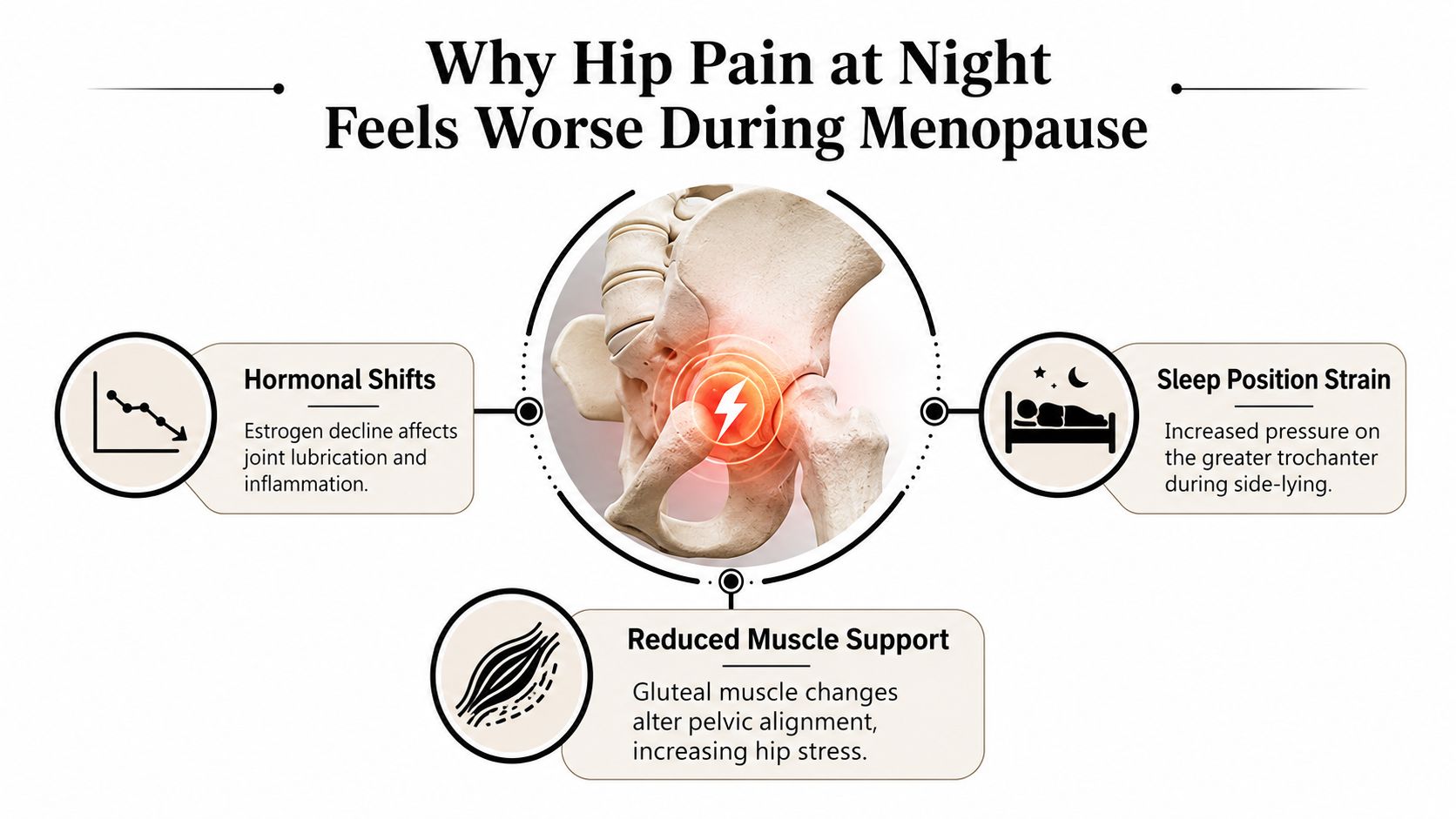
The hormonal pillar
Menopause-associated musculoskeletal symptoms can occur across several joints and soft tissues. Aching in both hips, stiffness after rest and discomfort on first standing may suggest a wider symptom pattern, while a single sharply tender area may raise suspicion of a local tendon, bursa or joint problem. These are clinical clues, not diagnostic rules, and overlapping causes are common.
NICE includes joint and muscle pain among menopause-associated symptoms and notes that some people report improvement with HRT in its full guideline. However, direct trial evidence for musculoskeletal pain is limited. HRT may be discussed when the wider menopause picture supports it, but it is not a diagnostic test or a substitute for examination when pain is localised, one-sided or reproduced by movement or pressure.
The structural pillar
The outer hip contains the gluteal tendons and bursae beside the greater trochanter, the bony prominence felt at the side of the hip. Irritation there commonly causes lateral pain when lying directly on that side. Gluteal tendon pain often worsens with stairs, single-leg loading, or rising from a chair, whereas deep groin pain raises more concern about the hip joint itself.
Previous injury, osteoarthritis, an altered walking pattern, or reduced pelvic strength can leave one side more vulnerable. These mechanical factors deserve attention even when symptoms began during menopause.
The sleep-related pillar
Side-lying maintains pressure through the greater trochanter, while staying still for hours can increase stiffness. Poor sleep then makes pain more intrusive the next day and may lead to guarding, reduced movement, and further loss of strength.
Practical rule: If lying on one side reliably reproduces the pain, reduce that compression first. Test a pillow between the knees or a different sleeping position before assuming medication or HRT is the first answer.
The Five Common Causes of Night-Time Hip Pain
Night-time hip pain during menopause needs triage. Ask whether the dominant driver is hormonal sensitivity, a structural problem, or sustained pressure from sleep position. The location and behaviour of the pain usually provide better clues than its timing alone. These patterns are not a diagnosis, but they make a GP or physiotherapy assessment more precise.
Hormonal joint and tendon change usually causes a broader ache rather than one sharply tender spot. Both hips, several joints or surrounding muscles may feel stiff, particularly after rest or on first standing. A wider symptom pattern supports this possibility. Localised, one-sided pain still needs examination.
Hip osteoarthritis commonly produces deep groin pain, sometimes extending into the front of the thigh or knee. Turning in bed, rising from a chair and walking can provoke it. Morning stiffness may occur, but prolonged or severe stiffness should not be attributed to menopause without assessment.
Trochanteric bursitis refers to irritation of the fluid-filled bursa beside the outer hip. It can cause a lateral ache, tenderness over the bony prominence and pain when you lie on that side. Bursal irritation often overlaps with gluteal tendon pain, so the label does not always identify the main source.
Gluteal tendinopathy is often mistaken for bursitis because both affect the outer hip. Pain that increases with single-leg standing, stairs, rising from a low chair or resisted hip movement points towards tendon loading. Side-lying compression is another useful clue. Menopause-associated symptoms may coexist with tendon or bursal pain, but the mechanical pattern remains important. The NICE menopause evidence review does not establish that lower oestrogen caused an individual tendon disorder.
Sleep posture and mattress factors can aggravate any of these conditions. A mattress that lets the pelvis roll, an unsupported top leg or repeated side-lying on the painful side can maintain pressure for hours. If changing the pillow or position alters the pain, address that factor early while arranging assessment where needed.
| Cause | Where it hurts | When it wakes you | Key aggravator | Distinguishing clue |
|---|---|---|---|---|
| Hormonal joint and tendon change | Both hips or several areas | During rest or on first standing | Prolonged inactivity | Broader aching pattern |
| Hip osteoarthritis | Deep groin or front of hip | Turning or moving in bed | Walking, stairs, rising from a chair | Joint-related restriction |
| Trochanteric bursitis | Outer hip over the bony point | When lying on that side | Direct pressure | Local tenderness |
| Gluteal tendinopathy | Outer hip, sometimes outer thigh | Side-lying compression | Single-leg loading or stairs | Pain with tendon loading |
| Sleep posture | The already-irritated area | After sustained positioning | Unsupported side-lying | Changes with pillow or position |
How Clinicians Diagnose the Source of Night Hip Pain
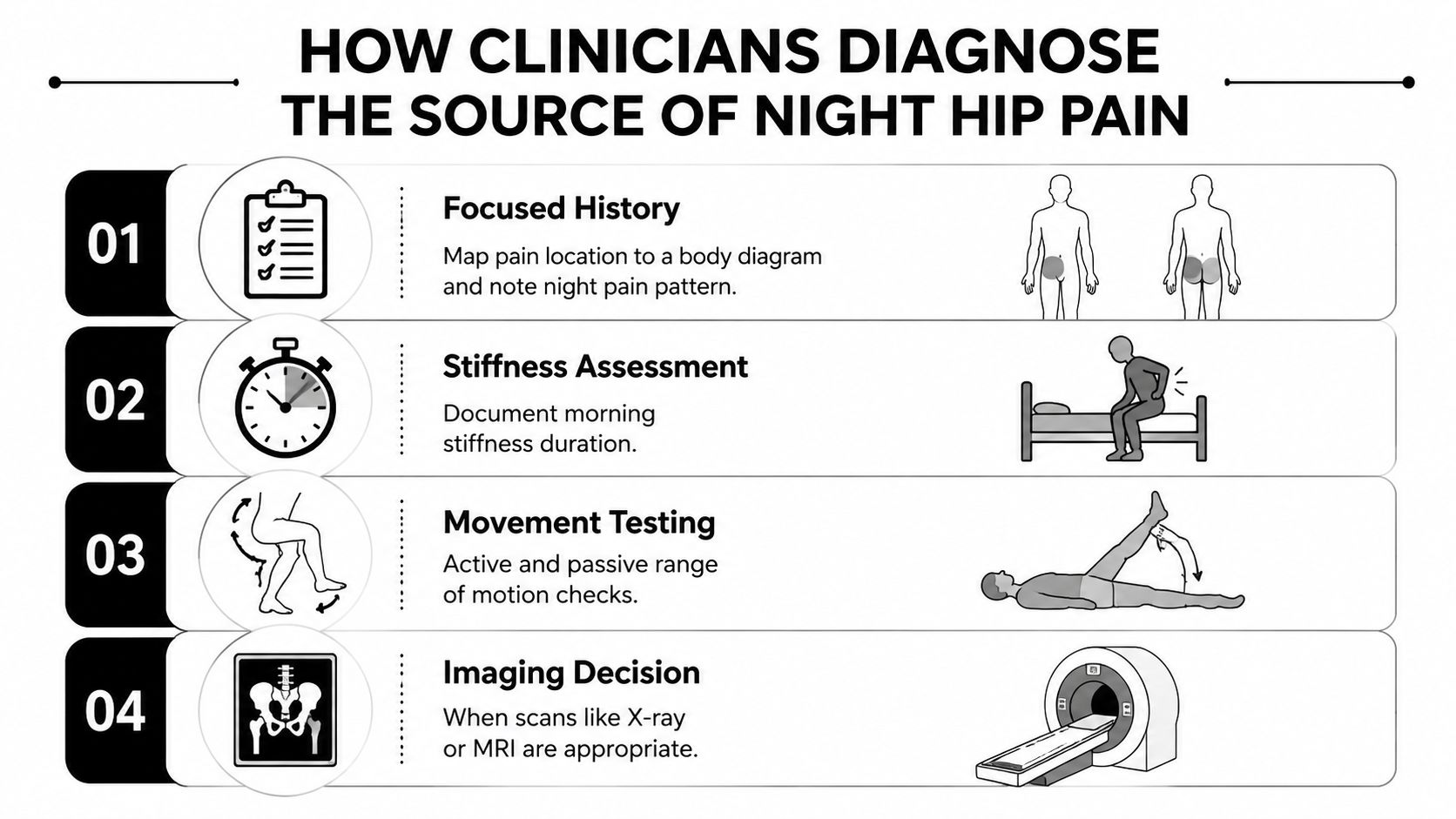
A useful appointment starts with a map, not a vague description such as “my hip hurts”. Tell the clinician whether the pain is in the groin, outer hip, buttock or lower back, and whether it travels down the thigh. Record which side wakes you, whether turning triggers the pain, how long morning stiffness lasts and what happens during the day.
Your menopause timeline matters too. Note changes in periods, hot flushes, sleep quality and other joint symptoms, alongside previous hip, pelvic or lumbar problems. This helps separate a systemic menopausal pattern from a local mechanical condition.
What the examination is trying to reproduce
A physiotherapist or GP may observe your gait, test active and passive hip movement and assess the lower back. A supported single-leg stand can load the lateral hip, while resisted hip abduction may reproduce gluteal tendon pain. Tests such as FABER, FADIR and the log roll assess different aspects of hip-joint or capsular irritation, but no single manoeuvre should be interpreted in isolation.
Imaging is most useful when it answers a specific question. NICE recommends diagnosing typical osteoarthritis clinically without routine imaging; a radiograph becomes more useful when features are atypical, another diagnosis is suspected or the result would change management. Ultrasound may support assessment of superficial tendon or bursal problems, while MRI is generally reserved for persistent unexplained symptoms, suspected tears or concerning findings rather than being the automatic first step.
Questions to take with you
Ask:
- Pattern: Could the location and triggers indicate tendon, bursa, joint or referred back pain?
- Menopause: Could my wider symptoms justify an HRT discussion?
- Rehabilitation: Would a tendon-focused loading plan or physiotherapy assessment be appropriate?
- Bone health: Do my history and symptoms justify a diagnostic DEXA scan?
- Escalation: Which changes should prompt an earlier review?
For a structured assessment pathway, you can also review clinical assessment services, while remembering that body analytics don't replace a clinical examination of painful tissue.
Recognising Your Pain Pattern in Real Examples
A 52-year-old in perimenopause describes aching across both hips, worse after lying still and noticeable when she first stands. She doesn't have one sharply tender spot, and turning in bed produces general discomfort rather than a sudden stab. That pattern fits a broader menopausal musculoskeletal presentation more closely than isolated lateral tendinopathy, although an examination is still needed to identify any underlying joint problem.
A different patient, aged 58, points to the outside of one hip. She can reproduce the pain by lying on that side and is tender directly over the greater trochanter. Stairs, standing on one leg and getting out of a low chair also aggravate it. In this pattern, reducing compression and beginning carefully graded gluteal loading make more sense than repeatedly stretching the hip across the body.
The third example is a 49-year-old with deep groin pain when turning in bed. She also reports stiffness when she gets up in the morning and discomfort with walking. The location and movement-related symptoms raise greater concern for hip-joint pathology, such as osteoarthritis, than for a superficial bursa.
These examples show why “hip pain at night menopause” is not one diagnosis. Pain location, the position that provokes it and the movement that reproduces it determine the sensible next step. A symptom diary for several nights can be more useful than trying to remember everything during a short appointment.
Self-Management Strategies That Help at Night
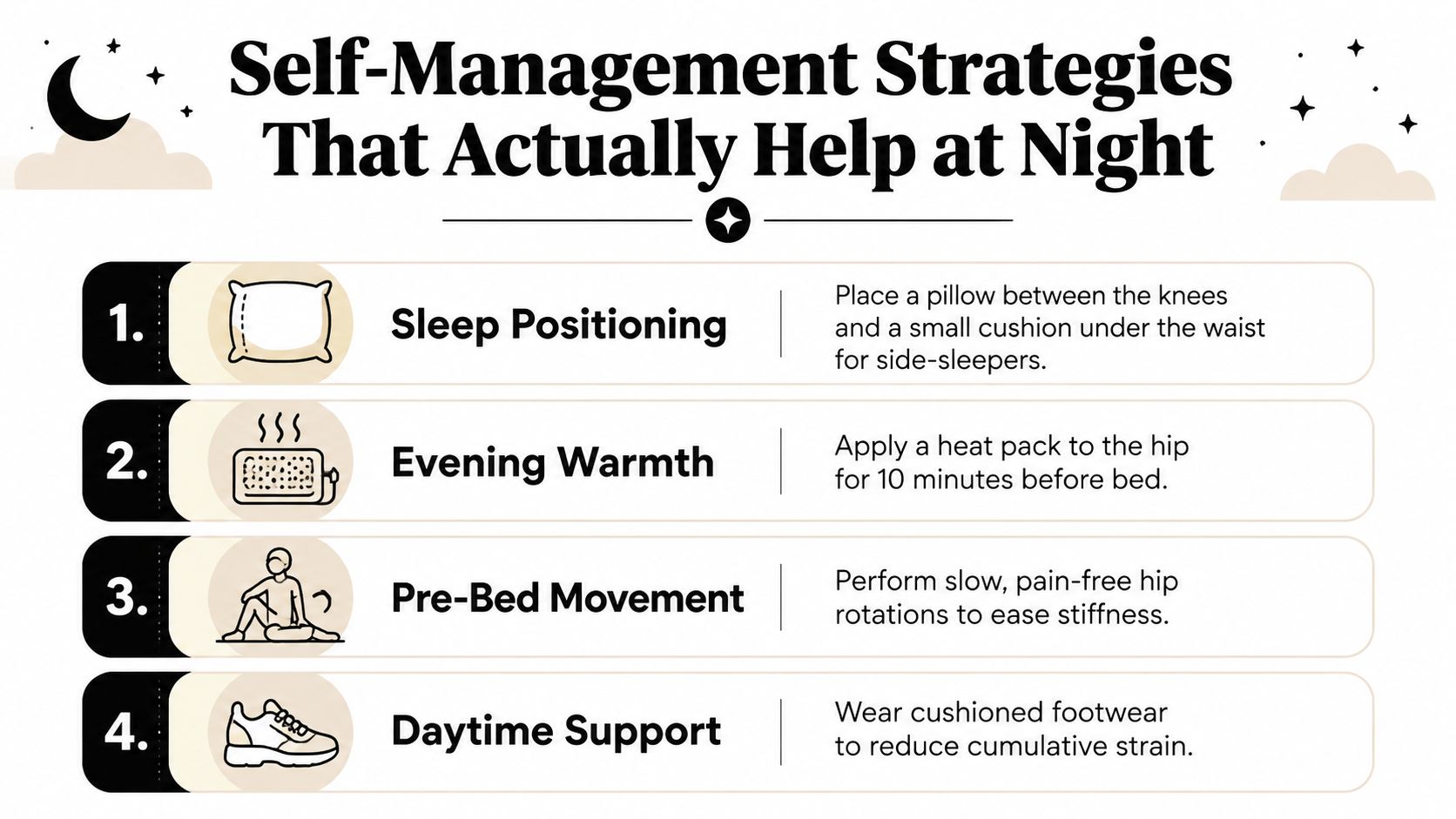
Night-time relief starts with triage. If pain is clearly triggered by pressure on the outer hip, change the sleeping position before adding stretches or medication. Side-sleepers can place a firm pillow between the knees and ankles, stopping the upper leg from dropping across the body. A small cushion under the waist may reduce pelvic pull. Back-sleepers often prefer support beneath the knees.
Change position before pain becomes severe. Avoid repeatedly testing the painful side during the night, sitting cross-legged, or standing with your weight hanging into one hip. These habits can maintain compression around an irritable lateral hip.
Build support gradually
Complete rest can leave the hip less prepared for ordinary loading. Start with pain-free isometric contractions, then progress to controlled exercises such as supported standing hip abduction, sit-to-stands and carefully managed step-ups. Keep the pelvis level, move slowly and stop if pain becomes sharp or progressively worse.
A physiotherapist can adjust the exercise dose when the outer hip remains sensitive. A postural assessment may identify movement or alignment factors contributing to repeated strain, but it cannot establish a medical diagnosis.
Use heat before gentle movement when stiffness dominates. Use cold after activity when soreness is the main problem. Over-the-counter pain relief may suit some people, but ask a pharmacist or GP first if you have other conditions, take regular medicines or are unsure which option is safe.
Sleep matters twice: it supports recovery, and disrupted sleep can make the same physical stimulus feel more painful the following day. Advice on how to break the pain-insomnia cycle, can complement, rather than replace, a hip-specific plan.
A short wind-down routine may reduce protective muscle guarding. Try calm breathing, gentle hip movements within a comfortable range and a consistent bedtime.
Choosing Between HRT, Physiotherapy, and Sleep Changes
The right first treatment depends on the pattern. Diffuse aching with other menopausal symptoms makes an HRT review worth discussing. Localised outer-hip pain linked to compression and loading points more strongly towards physiotherapy. Sleep-position changes are low-risk and useful across both patterns, so they can start while you arrange further assessment.
| Pathway | Best-fit symptoms | Expected timeline | First step |
|---|---|---|---|
| HRT review | Wider menopausal symptoms with diffuse joint or tendon aching | Review response with your clinician over time | Arrange a GP or menopause-clinic discussion |
| Physiotherapy-led loading | Outer-hip pain with side-lying, stairs or single-leg loading | Progress depends on consistency and irritability | Request a targeted hip assessment |
| Sleep and posture changes | Pain clearly linked to side-lying or prolonged positioning | Comfort may change as soon as pressure changes | Use knee and waist support tonight |
HRT isn't a direct repair for a torn or overloaded tendon. It may help symptoms associated with reduced ovarian hormone production, while strengthening addresses the tissue's ability to tolerate load. Conversely, exercise won't resolve every hormonal symptom, especially if sleep disruption, flushes and widespread aching are prominent.
Physiotherapy also has trade-offs. Loading can briefly make a sensitive tendon more noticeable, and progress depends on adjusting activity rather than stopping everything. This commercial guide to hip pain treatment describes a broad range of options, including some regenerative treatments that are not routine NHS care. Use it for background only; NICE guidance and your own clinical diagnosis should guide treatment.
The most effective plan is often combined: reduce night-time compression, keep moving within tolerance, build hip strength and discuss HRT when the wider menopause picture supports it. If pain remains localised and mechanically reproducible, don't let a menopause explanation delay tendon rehabilitation.
Why Bone Density Testing Matters for Menopausal Hip Pain
Night-time hip pain doesn't automatically mean low bone density. Osteoporosis is often silent until a fracture occurs, so pain location and movement behaviour still matter. However, menopause is an appropriate time to discuss whether your skeletal health has been assessed, particularly if you have fracture risk factors, a previous low-impact fracture or prolonged exposure to medicines that affect bone.
A diagnostic DEXA scan measures bone mineral density at sites such as the hip and spine. Clinicians interpret the result with the wider history, and may use tools such as FRAX to estimate fracture risk. The result can influence whether you need lifestyle advice, further investigation or medical treatment. DEXA uses a low dose of ionising radiation and is not usually performed during pregnancy, so tell the provider if you are pregnant or might be pregnant.
The practical distinction: A DEXA scan assesses bone strength risk. It doesn't identify whether a tender outer hip is caused by a gluteal tendon.
Related tests can help identify contributors to poor bone or muscle health, but they must be selected for a clinical reason. A GP may consider vitamin D, thyroid function or inflammatory markers when your symptoms and history suggest they're relevant.
| Test | What it measures | Relevance to night hip pain |
|---|---|---|
| Diagnostic DEXA | Bone mineral density at the hip and spine | Assesses skeletal vulnerability and fracture risk |
| Vitamin D blood test | Vitamin D status | Helps investigate a possible nutritional or metabolic contributor |
| Thyroid testing | Thyroid function | Identifies a condition that can affect muscles and general wellbeing |
| Inflammatory markers | Evidence of systemic inflammation | Useful when symptoms suggest an inflammatory disorder |
Telomyx provides mobile full-body DEXA scanning and body-composition assessment, but a wellness scan isn't a substitute for diagnostic osteoporosis assessment. Read how bone density scanning works in the UK, then discuss with your clinician whether a diagnostic hip-and-spine DEXA is the appropriate test for you.
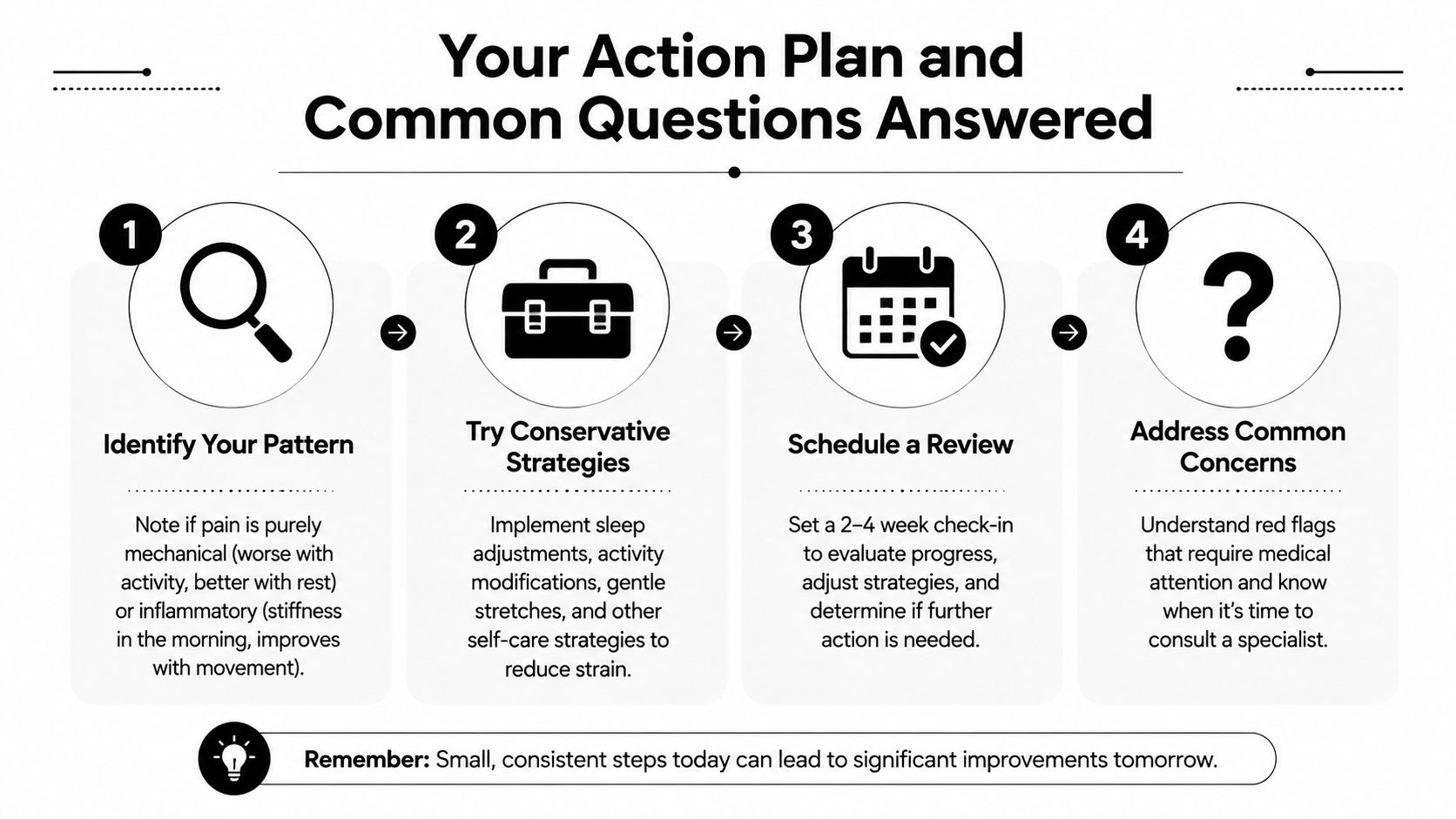
Your Action Plan and Common Questions Answered
Use the pain pattern to decide what deserves attention first.
- Identify the pattern: Record the exact location, side, waking position, movement triggers and morning stiffness. Note whether symptoms are widespread or confined to one outer hip.
- Reduce pressure and manage load: Support your legs during sleep, stop repeatedly lying on the painful side and keep gentle movement in your day. Begin strengthening only at a level that doesn't create a lasting flare.
- Arrange review: If the pain continues to disrupt sleep despite sensible changes, book a GP or physiotherapy assessment. Bring your notes, medication list and menopause symptom history.
- Protect long-term health: Ask whether bone-density assessment is appropriate, especially if your history suggests increased fracture risk.
Common questions
Why does hip pain disturb sleep even when there's no obvious injury? Sustained side-lying can compress an irritable outer-hip tendon or bursa, while stillness increases stiffness. Once sleep becomes fragmented, pain sensitivity can rise, creating a cycle in which discomfort wakes you and poor sleep makes the next night harder.
Does night pain always mean osteoporosis? No. Position-dependent outer-hip pain is commonly mechanical, but bone health still deserves appropriate review because low bone density may not produce early warning symptoms.
How quickly will HRT help? There's no reliable universal timetable. Response depends on the cause of the pain, the HRT regimen and the other symptoms being treated, so review it with the prescribing clinician rather than using it as a stand-alone test for tendon pain.
When is urgent care needed? Seek prompt medical help after a fall or twist with sudden severe pain, if you can't bear weight, or if pain occurs with fever, unexplained weight loss, numbness or a history of cancer. Persistent night pain without those features still warrants a routine clinical assessment.
The content in this article is for educational purposes only and does not constitute medical or dietary advice. If you have an underlying health condition, are taking medication, or are considering significant changes to your diet or exercise regimen, consult a qualified healthcare professional before making any adjustments.
Telomyx offers mobile full-body DEXA, VO2 Max and resting metabolic rate testing across the North West and at selected wider UK sites, giving you objective information about bone density, body composition and metabolic health to discuss with your clinician. Visit Telomyx to find an assessment location and take a more measured approach to protecting your skeletal health while you address night-time hip pain.