
Muscle Loss After 40: Evidence-Based Action Plan for 2026
16 August 2026Updated 19 August 2026
In UK Biobank, 5.3% of adults aged 40–70 met the EWGSOP2 criterion for probable sarcopenia, defined in this analysis by weak grip strength, and prevalence rose from 2.5% among people aged 40–49 to 7.6% among those aged 60–70 (UK Biobank research). This is not the same as confirmed sarcopenia, which also requires low muscle quantity or quality. Even so, muscle-related decline can appear during midlife as reduced strength or poorer physical function before an obvious change in the mirror.
That distinction matters. A stable body weight doesn't prove that lean tissue is being preserved, and body-composition testing can reveal changes that clothing size or bathroom scales miss. The practical approach is to assess both body composition and performance, then use resistance training, adequate nutrition and recovery to change the trend.
Table of Contents
- Why Muscle Loss After 40 Starts Earlier Than You Think
- The Hidden Gap Between Muscle Mass and Muscle Function
- How to Measure Muscle Loss Objectively
- The Clinical Risks of Ignoring Midlife Muscle Decline
- Your Evidence-Based Action Plan to Preserve Muscle
- When to Seek Clinical Testing and Medical Advice
- Building a Long-Term Strategy for Muscle and Longevity
Why Muscle Loss After 40 Starts Earlier Than You Think
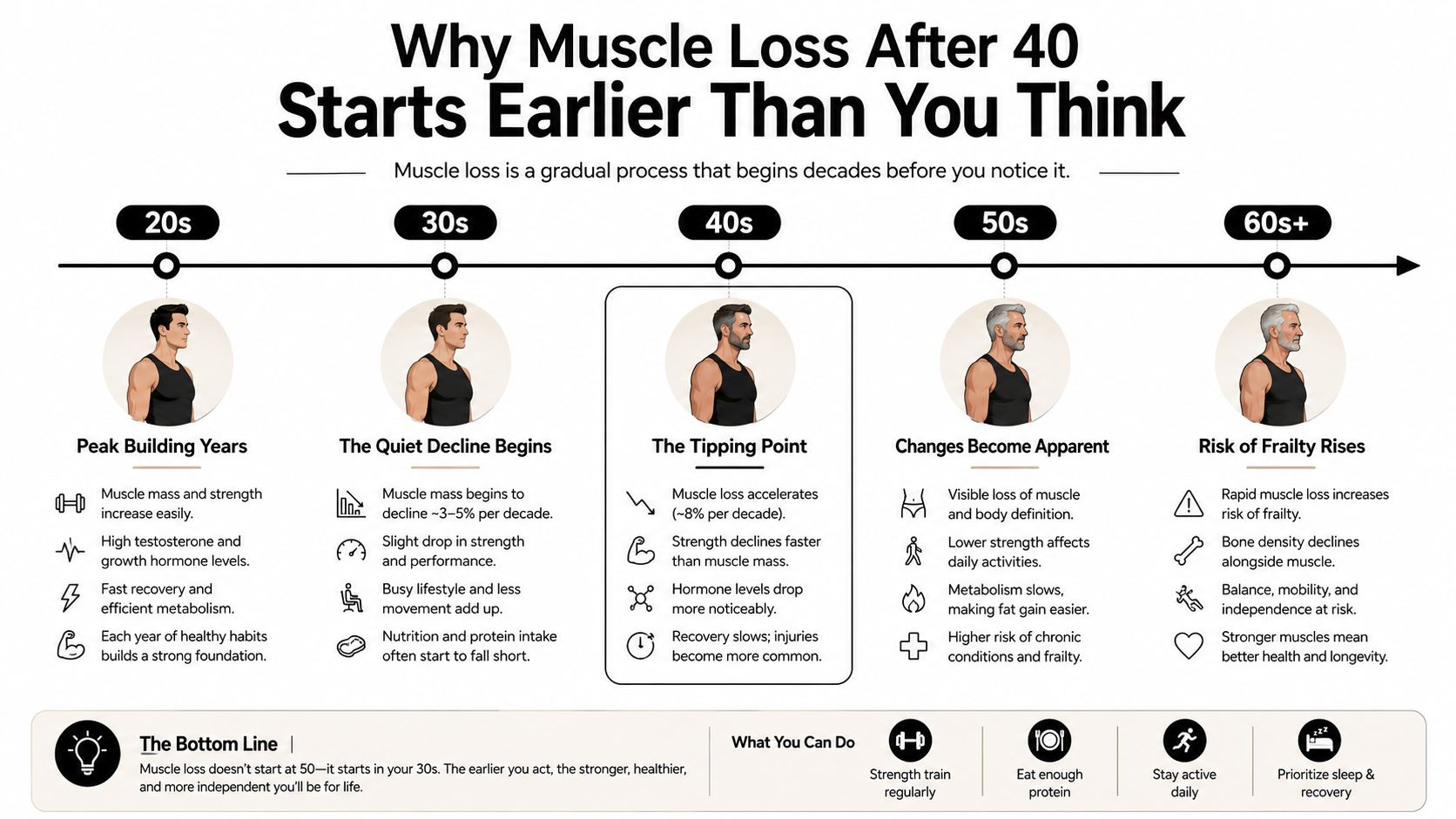
The fifth decade is a practical time to begin monitoring muscle. British Dietetic Association guidance describes gradual loss of muscle mass and strength from around age 40, estimated at about 0.5–1% per year. This is a population-level estimate rather than an inevitable personal rate. A separate consumer overview discusses the same midlife concern, but clinical decisions should rely on professional guidance and individual assessment.
UK Biobank figures show that measurable impairment can appear during midlife. Probable sarcopenia was present in adults aged 40–70, rising from 2.5% at ages 40–49, to 4.5% at ages 50–59, and 7.6% at ages 60–70 (UK Biobank analysis). These figures do not predict an identical path for every person. They do establish that early muscle-related decline can be identified before old age, weakness, or disability.
Why the decline is easy to miss
Several mechanisms can operate together. Hormonal changes may affect muscle-maintenance signals, while reduced motor-unit recruitment can limit how effectively the nervous system activates muscle fibres. Less daily activity, more sitting, disrupted sleep, illness, and sustained stress can then reduce the training stimulus that helps preserve strength.
Inflammation and energy balance also influence the picture, but they should not replace measurement. A sedentary week, a prolonged diet with too little energy, or repeated illness may affect performance sooner than age alone. The useful clinical question is whether your strength and function are changing, not whether you feel “old”.
Practical rule: Treat a gradual decline as a signal to collect better data, not as proof that decline is inevitable.
Reference curves from UK Biobank show why one generic threshold can misclassify risk. In an analysis of 390,565 UK adults aged 40–69, skeletal muscle mass index declined from age 40 in men, while it was comparatively stable in women and fell only slightly in higher percentiles (UK Biobank reference values). Sex-specific reference ranges, alongside repeated measurements of strength and performance, provide a better baseline than comparison with a gym acquaintance or an online “ideal” figure.
The Hidden Gap Between Muscle Mass and Muscle Function
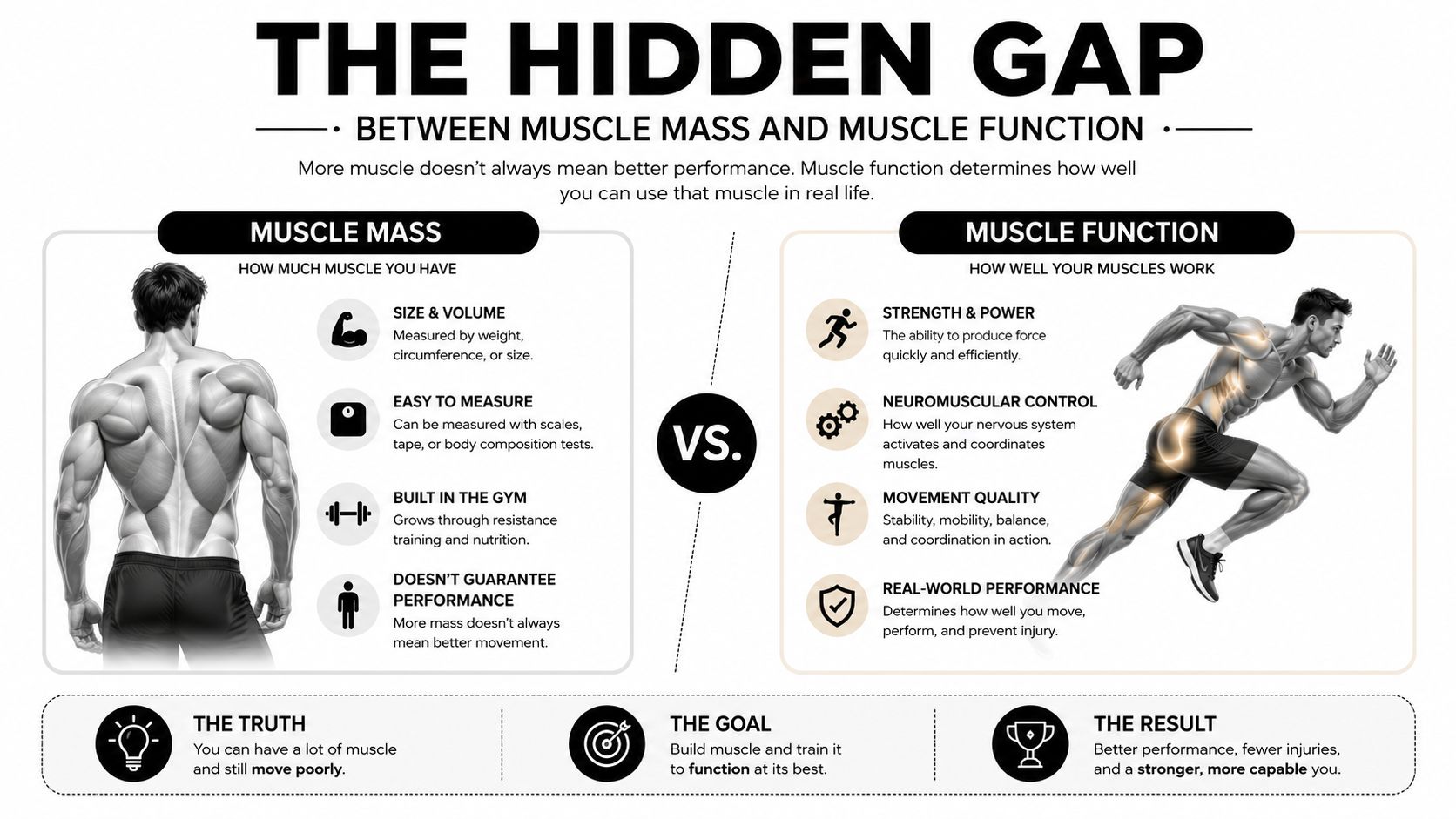
The scale tells you total mass. It doesn't tell you how much force you can produce, how quickly you can produce it, or whether you can get up from the floor without using your hands. That gap is why muscle function often deserves equal or greater attention than muscle size.
A person can maintain weight by replacing lean tissue with fat, retain a relatively muscular appearance, or carry more total muscle mass while still losing useful strength. UK guidance also notes that sarcopenia can affect people who are underweight or overweight, and that prevalence estimates vary from 4–25% depending on the definition and tests used (British Dietetic Association guidance). The variation isn't a contradiction. It shows that diagnosis changes according to whether clinicians assess mass, strength, physical performance, or a combination.
What function can reveal first
The early warning signs are often ordinary tasks that have become more demanding:
- Grip strength: Jars, luggage, weights, and tools feel harder to control.
- Chair rises: Standing from a low chair requires momentum or hand support.
- Walking ability: Your pace slows, or longer walks become disproportionately tiring.
- Power output: Stairs, hills, cycling efforts, and lifting from the floor feel less decisive.
- Balance under pressure: You recover less confidently from a trip or awkward step.
Current EWGSOP2 consensus already prioritises low muscle strength for probable sarcopenia, uses low muscle quantity or quality to confirm it, and uses poor physical performance to identify severity. A 2025 non-peer-reviewed preprint on sex-specific muscle function reported annual grip-strength declines of about 1.0% in women and 0.75% in men aged 40–69, but those estimates should be treated as preliminary rather than a new diagnostic standard. During perimenopause and menopause, body composition, training tolerance, sleep and symptoms may change together, making scale-only assessment especially limited.
The assessment principle
Don't ask only, “How much muscle do I have?” Ask, “What can that muscle do, and is it doing less than it used to?” A useful assessment combines body composition with a repeatable strength or performance measure, interpreted against appropriate age and sex references.
That approach prevents two common errors. It stops a heavier person with declining function from being falsely reassured by muscle mass, and it stops a smaller person from being labelled weak because they don't match a generic body-composition target.
How to Measure Muscle Loss Objectively
A sensible testing plan starts with a baseline chosen to answer a specific question. Depending on the person, this may include regional lean mass, fat distribution, measured resting energy expenditure and a functional measure that can be repeated under similar conditions. Suspected osteoporosis requires an appropriate clinical fracture-risk and diagnostic assessment rather than reliance on whole-body composition data.
Choose the test for the question
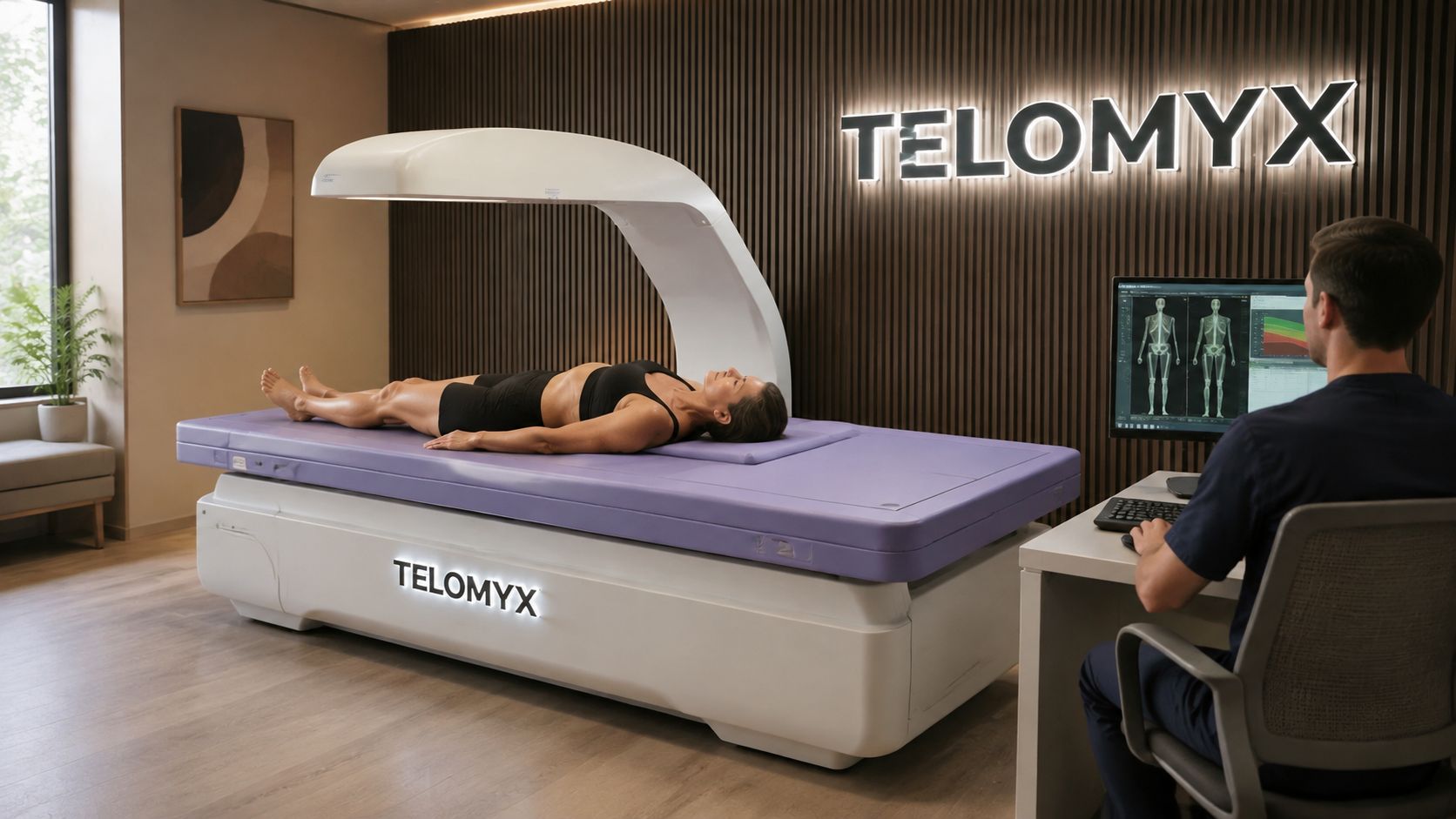
A Telomyx DEXA body-composition scan can estimate total and regional fat mass and lean soft tissue, helping show whether weight change reflects fat, lean tissue or both. Lean soft tissue is not identical to skeletal-muscle mass, and whole-body bone data is not equivalent to diagnostic hip-and-spine osteoporosis assessment. Use repeated measurements only when the result is likely to change a training, nutrition or referral decision.
A Telomyx RMR test answers a different question by estimating energy use at rest through indirect calorimetry. It can replace the predicted resting component of a nutrition calculation, but it does not diagnose sarcopenia, measure total daily expenditure, assess intake accuracy or explain training quality by itself.
Functional testing closes the gap. Grip dynamometry, a timed chair-rise assessment, gait speed, and a carefully recorded strength exercise can reveal whether your capacity is improving even when lean-mass changes are small.
For a practical guide to interpreting results, see how to understand body-composition scan results.
| Test | What It Measures | Best For | Frequency |
|---|---|---|---|
| Body-composition scan | Regional lean soft tissue and fat mass | Establishing composition and tracking change | At a consistent interval agreed with a clinician |
| Resting metabolic measurement | Resting energy expenditure | Setting and reviewing nutrition targets | When goals, body composition, or energy needs change |
| Grip dynamometry | Hand and forearm force | Monitoring strength trends | Repeated under the same testing conditions |
| Gait or chair-rise assessment | Functional movement and mobility | Identifying performance decline | During clinical review or when symptoms change |
| Exercise performance log | Load, repetitions, technique, and tolerance | Checking progressive overload | Every training session |
How to interpret the numbers
No result should be read in isolation. Scan-derived lean mass includes more than contractile muscle tissue, and a single reading cannot explain why a result changed. Hydration, recent training, food intake, positioning and the device's analysis method can all affect interpretation.
The most useful comparison is a consistent trend paired with function. If regional lean mass is stable but grip strength, chair rises, or walking ability worsen, the programme needs review rather than reassurance. If weight falls during a calorie deficit and strength drops sharply, preserving lean tissue should become the priority.
The Clinical Risks of Ignoring Midlife Muscle Decline
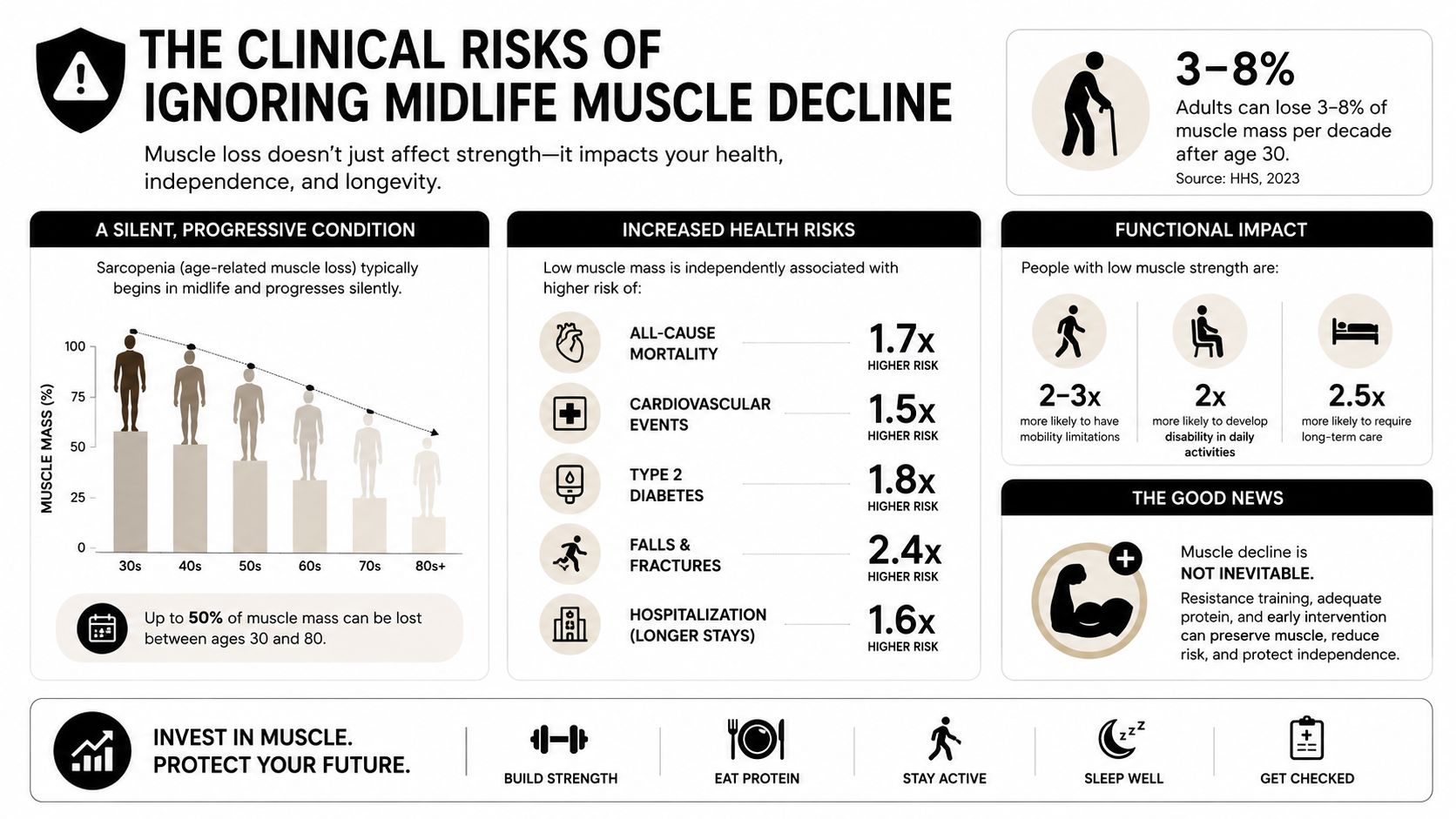
Muscle loss after 40 becomes clinically important when declining capacity starts limiting ordinary movement. UK Biobank findings associated probable sarcopenia with poorer physical function, including recent falls and slower walking or inability to walk (UK Biobank research). In practice, a lower performance score may appear first as reduced confidence on stairs, slower recovery after a stumble, or difficulty managing routine tasks.
A separate UK Biobank publication on sarcopenia, long-term conditions, and multimorbidity links probable sarcopenia with long-term conditions and multimorbidity among UK participants. This does not establish that muscle decline causes every later health problem. It identifies reduced muscle mass and function as a marker of broader vulnerability, particularly alongside inactivity, poor nutrition, illness, or excess adiposity.
Why muscle is a longevity asset
Active muscle provides reserve for movement, rehabilitation, and daily work. Once that reserve falls, a minor injury or short illness can produce a larger loss of independence because the person begins recovery from a lower functional baseline.
Muscle function also affects the wider metabolic picture. Lower activity and reduced lean tissue can make glucose control and energy balance harder to manage. Changes in body composition may occur alongside visceral fat accumulation and reduced protection for bone. These are clinical concerns, not reasons to pursue a particular aesthetic.
Sex-specific patterns matter when interpreting this decline. Men and women can lose muscle function through different combinations of hormonal change, illness, activity and body-composition shifts. A body-composition scan can show regional lean-mass change, but grip strength, chair rises, gait and training performance reveal whether function is changing. A normal-looking body or stable scale weight cannot rule out early functional decline.
The meaningful outcome is a body that can produce force, recover from challenge, and handle ordinary life confidently.
The following video reinforces the relationship between strength, movement, and healthy ageing:
Your Evidence-Based Action Plan to Preserve Muscle
The most effective plan is usually less glamorous than the latest supplement stack. It creates a repeated signal for muscle retention, supplies enough raw material, and protects recovery so the signal can work.
Make resistance training the anchor
Train the major movement patterns consistently: a squat or sit-to-stand, a hinge, a push, a pull, and a loaded carry where appropriate. Machines, cables, dumbbells, and bodyweight variations can all work. The right choice is the one that lets you challenge the target muscles while maintaining safe technique and progressing over time.
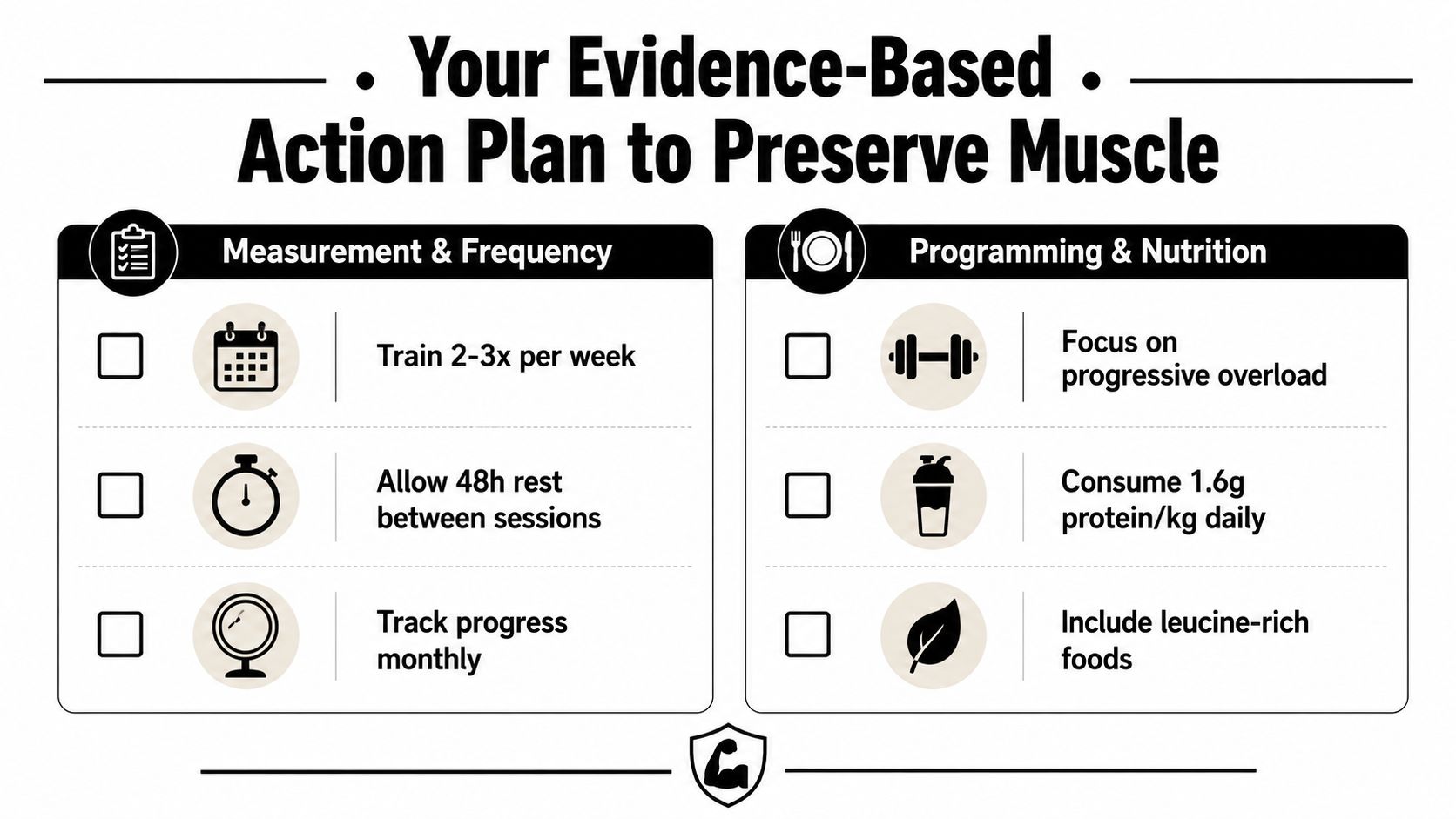
A practical starting structure is two to three resistance sessions each week, with about 48 hours between sessions that challenge the same muscle groups, as shown in the supplied action-plan framework. Record the load, repetitions, range of motion, and perceived effort. If the same work becomes easier, increase the challenge gradually through additional repetitions, load, range, or better control.
The programme should be demanding, not reckless. Joint pain, persistent fatigue, or deteriorating technique means the exercise selection, volume, or recovery needs adjustment. Cardio can support cardiovascular fitness and activity levels, but it doesn't replace the mechanical loading required to preserve strength.
For a longer-term perspective, read strength training for longevity.
Feed the work without creating a fragile diet
Protein matters, but “eat more protein” is incomplete advice. Needs vary with age, training, total energy intake and health. For healthy adults undertaking resistance training, a large meta-analysis found no further average lean-mass benefit from protein supplementation once total intake exceeded about 1.6 g/kg/day; this is better understood as an approximate upper point in that evidence, not a universal target. Older adults and people with illness, kidney disease, reduced appetite or weight-loss goals should individualise intake with a dietitian or clinician. Suitable foods can include dairy, eggs, fish, meat, soya and legumes.
Distribute protein through the day instead of concentrating almost all of it at dinner. Around training, a normal protein-containing meal is often sufficient. A supplement can be convenient, but it won't compensate for inadequate total energy, poor training progression, or insufficient sleep.
Chronic aggressive dieting is a common trade-off that can compromise training performance and lean tissue. Be particularly cautious if you are an athlete, are navigating perimenopause with under-fuelling concerns, or have a current or previous eating disorder. Deteriorating recovery, menstrual function, mood or strength warrants professional review rather than another calorie cut. Measured resting expenditure can inform one part of a more sustainable plan, but it cannot determine an appropriate deficit on its own. For practical food ideas, see these snacks that boost metabolism, while remembering that no snack independently “boosts” metabolism in a clinically meaningful way.
Protect adaptation
Recovery is part of the intervention. Keep sleep regular, schedule easier periods when fatigue accumulates, and address alcohol or stress patterns that repeatedly interfere with training quality. Your monthly review should include body weight, waist or clothing changes, key lifts, grip or functional performance, energy, and any symptoms.
When to Seek Clinical Testing and Medical Advice
Self-management is reasonable when changes are gradual, training is consistent, function is stable, and there are no concerning symptoms. It becomes less appropriate when strength falls without an obvious training explanation, daily tasks become harder, or nutrition and exercise changes produce an unexpectedly poor response.
Seek medical advice for rapid unexplained weight loss, substantial strength decline, recurrent falls, persistent fatigue, new difficulty walking, or symptoms suggesting a metabolic or systemic problem. These signs can have causes unrelated to ageing, including medication effects, endocrine disorders, neurological conditions, inadequate energy intake, or other illness. A clinician can decide whether blood tests, medication review, physiotherapy, dietetic support, or specialist assessment is appropriate.
What testing can add
Body-composition measurement can provide a baseline for regional lean and fat mass. Resting-energy measurement can replace a formula estimate under defined test conditions. Grip strength and movement assessments add the functional context that these measurements cannot provide.
Private testing can be useful for people who want detailed baseline data or faster access to interpretation, but it shouldn't replace medical assessment when red flags are present. Ask who performs the test, how results are interpreted, which reference ranges are used, and whether the report distinguishes measurement limitations from genuine change.
Clinical decision: Test to answer a specific question. Don't collect a number unless you know what decision it will change.
A baseline is also valuable for apparently healthy adults in their 40s who want to monitor change proactively. Repeat testing should be consistent, not compulsive. The objective is to identify a deteriorating trend early enough to modify training, nutrition, or medical care.
Building a Long-Term Strategy for Muscle and Longevity
It isn't too late to start. The goal isn't to recreate your physique from earlier adulthood, but to improve the trajectory you're on. Progress may first appear as better chair rises, heavier controlled lifts, improved balance, or more confidence on stairs before a scan shows a major change.
Track the measures that matter together: regional lean mass, body fat, grip or functional performance, training records and how you manage daily life. Where osteoporosis risk is relevant, include an appropriate clinical bone-health assessment. A personalised fitness plan can help turn results into a routine that fits your health history, schedule and recovery capacity.
The best long-term strategy is repeatable. Train progressively, eat enough to support the work, recover deliberately, and investigate unexpected decline rather than accepting it as normal ageing.
The content in this article is for educational purposes only and does not constitute medical or dietary advice. If you have an underlying health condition, are taking medication, have a current or previous eating disorder, or are considering significant changes to your diet or exercise regimen, consult a qualified healthcare professional before making any adjustments.
Visit Telomyx to explore objective assessments that can support a professionally guided plan for preserving muscle and physical capability.